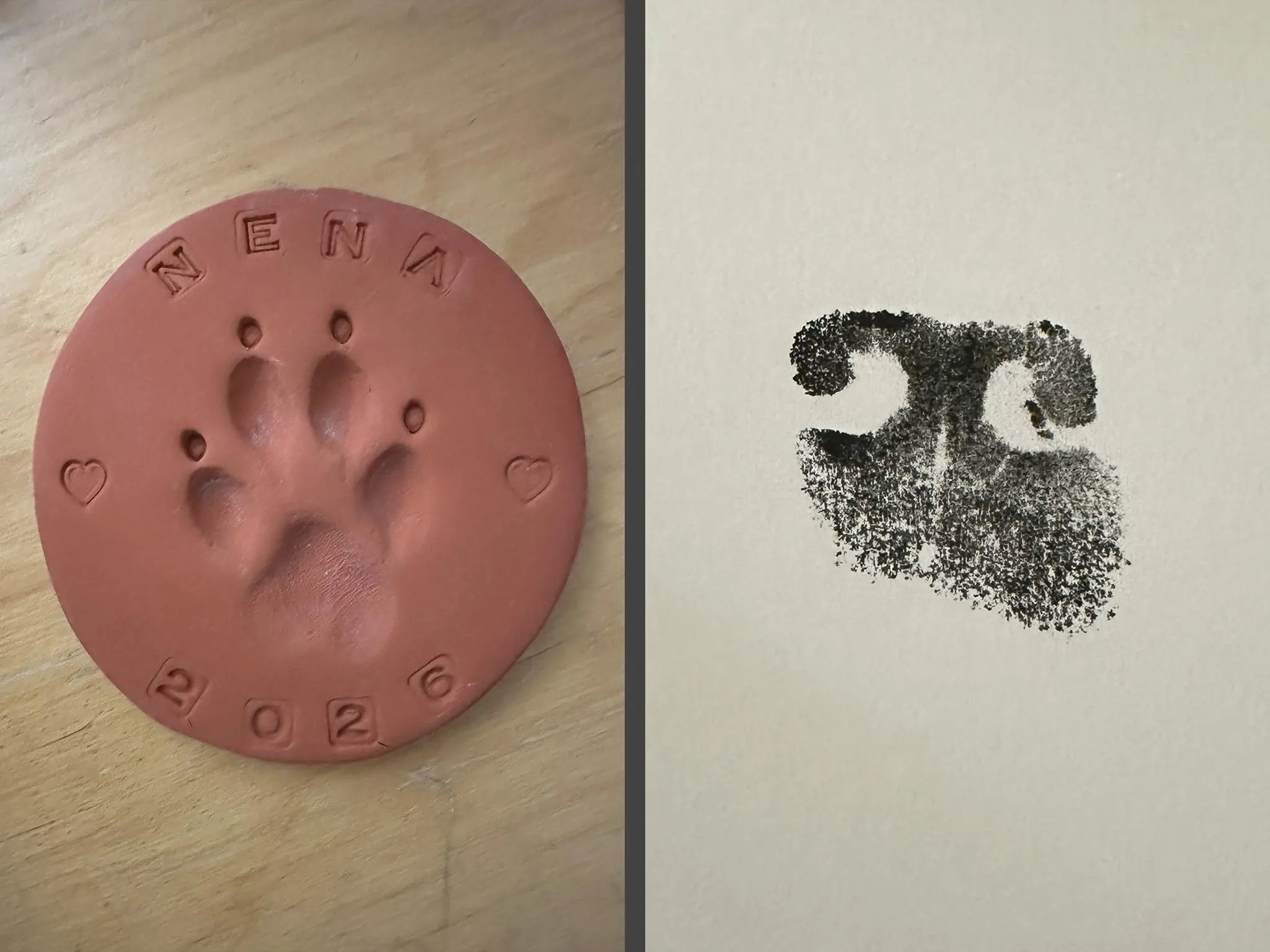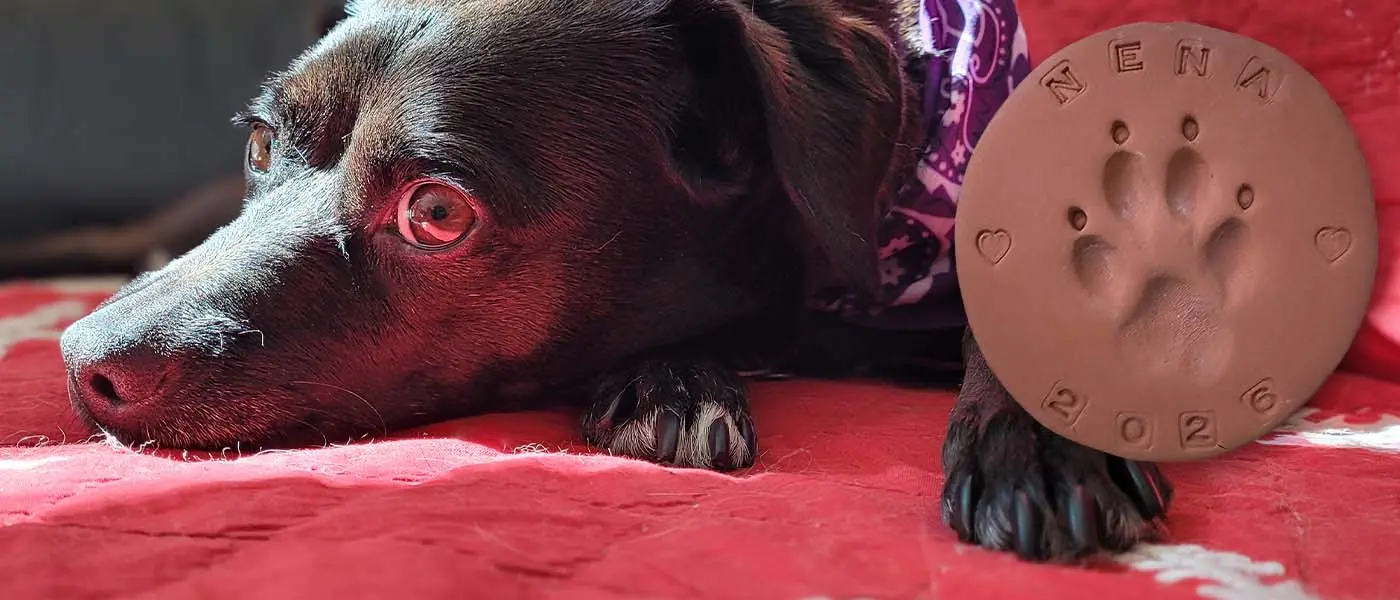
In 2013, Melissa quit her “day-job” to work on her business full-time. Since she would be home during the day, we started thinking about adopting a dog. Our main consideration was that we didn’t want to cause too much upheaval for Mei Mei, our eldest cat. She had never spent much time around dogs so we needed one that wouldn’t pester her too much.
Other than that, we had no firm requirements. My philosophy about adopting pets has always been to go meet some animals and see what “clicks” without a bunch of preconceptions about breed, size, age, or color.
On Sunday, June 23, 2013, we went to a Lost Dog and Cat Rescue Foundation adoption event at a local PetSmart. Right away we met a friendly male terrier mix who was about two months old; from our memories (aided by the Archive.org Wayback Machine) we think it was Toby. He was energetic, outgoing, and playful . . . much as I liked him, it wasn’t the right fit.
There was a volunteer there, a boy aged ten or eleven, who was paying attention to our conversation. While he was distracted, another dog sneaked up and licked some whipped cream off the top of his Frappuccino. Once he noticed, he rescued the Frappe and redirected that sneaky dog over toward us. “This is Sofia,” he said. “She’s shy but she’s really sweet.”
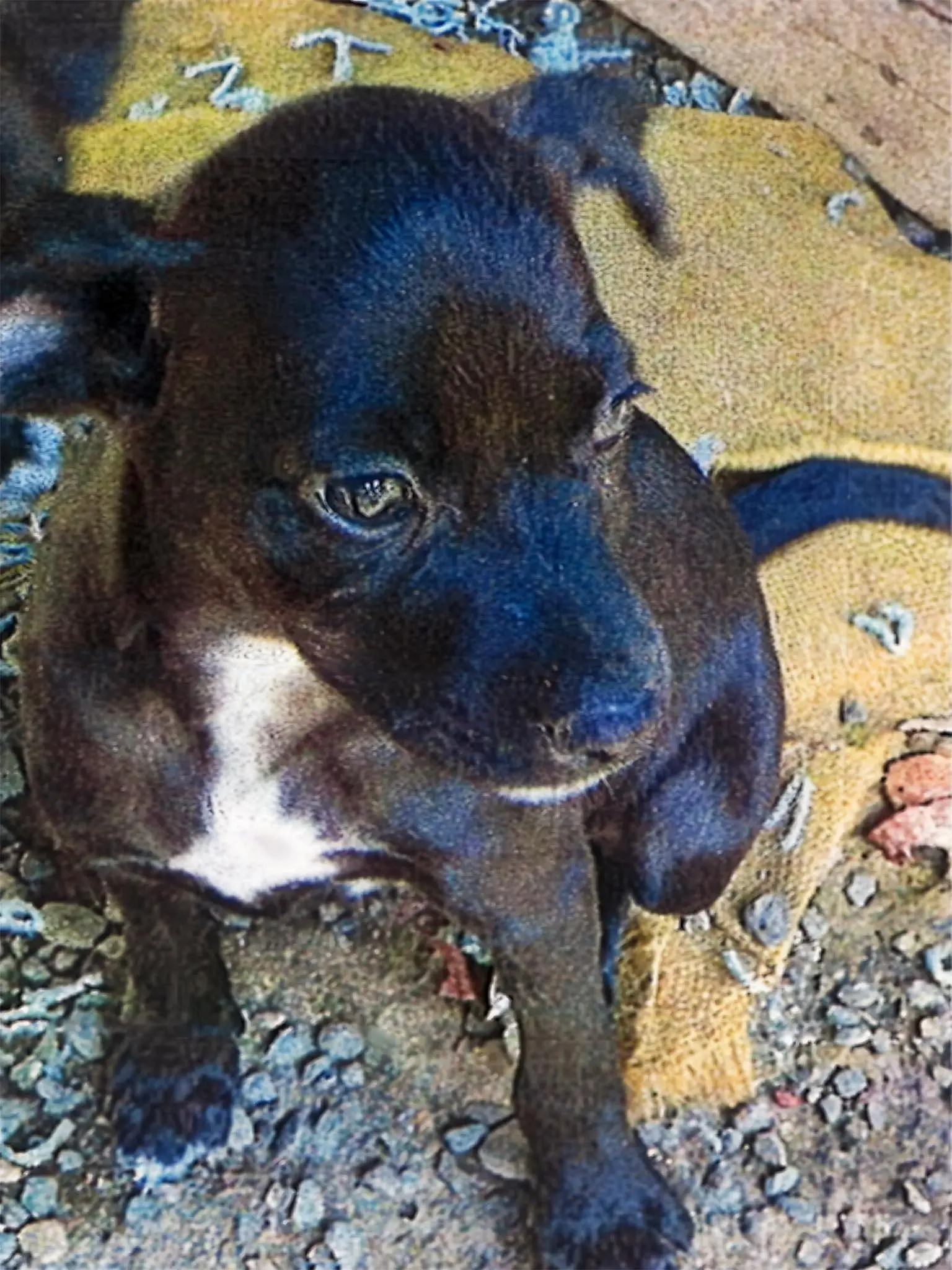
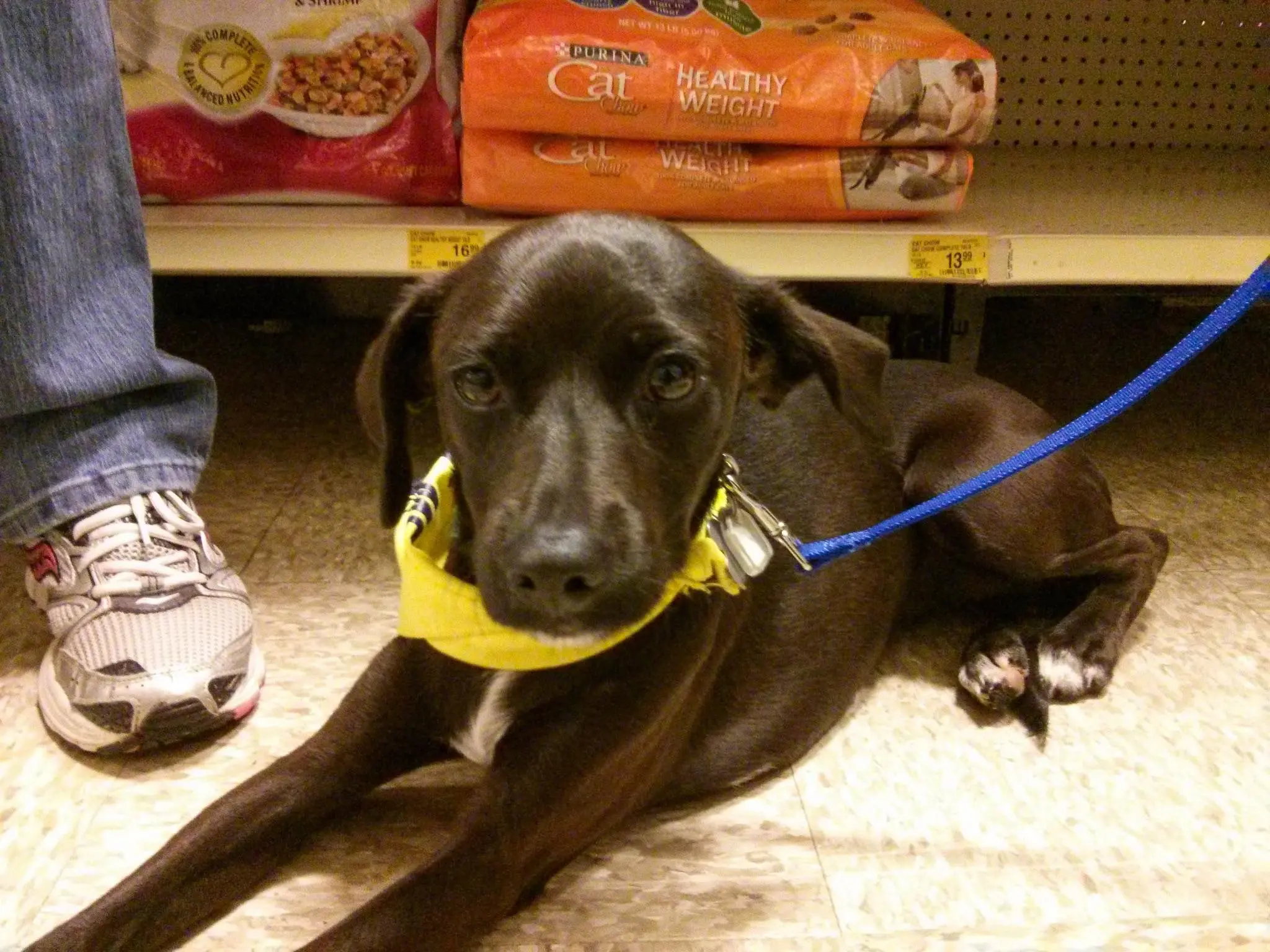
1 Photo by rescue group in Puerto Rico (restored)
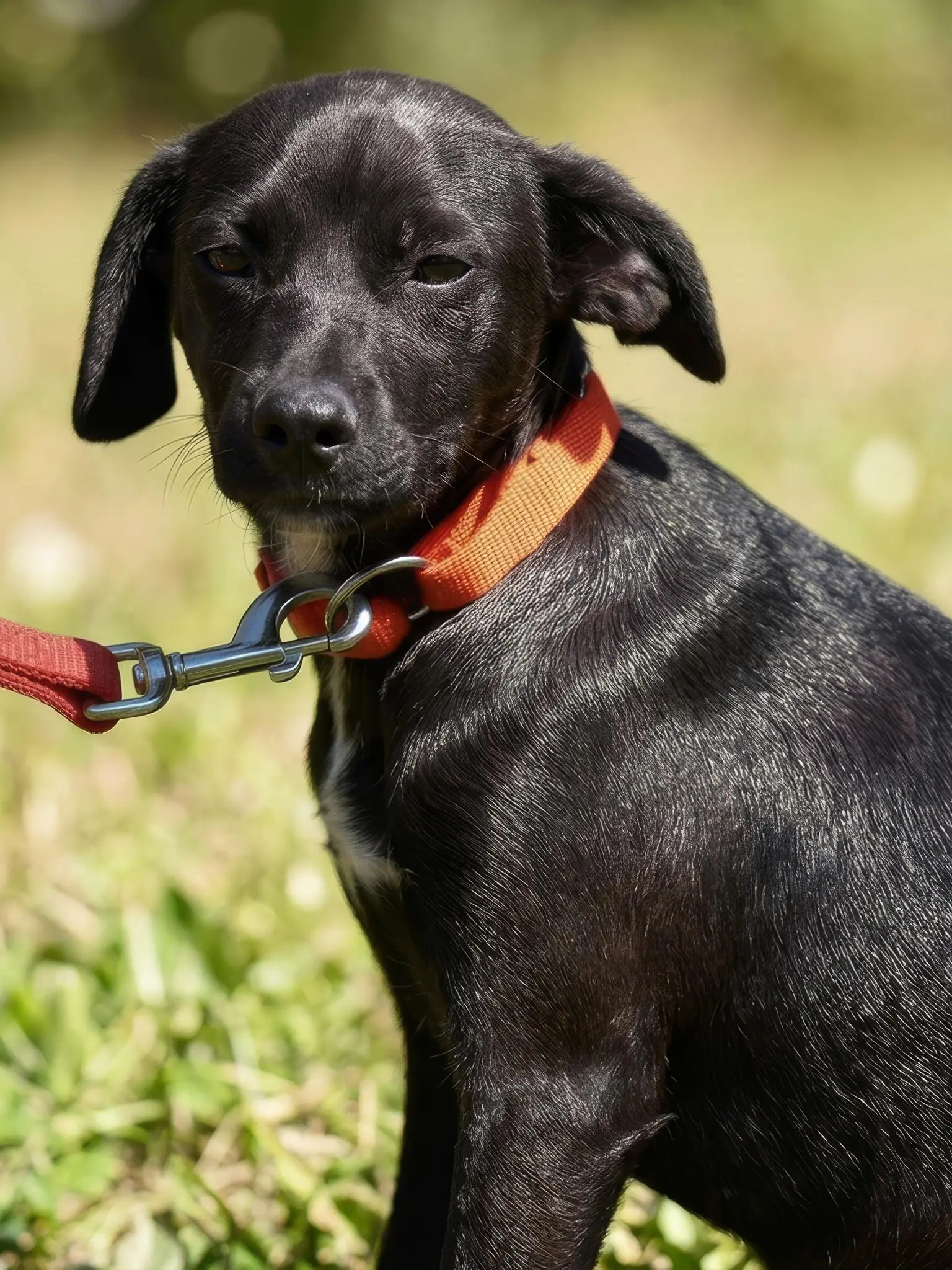
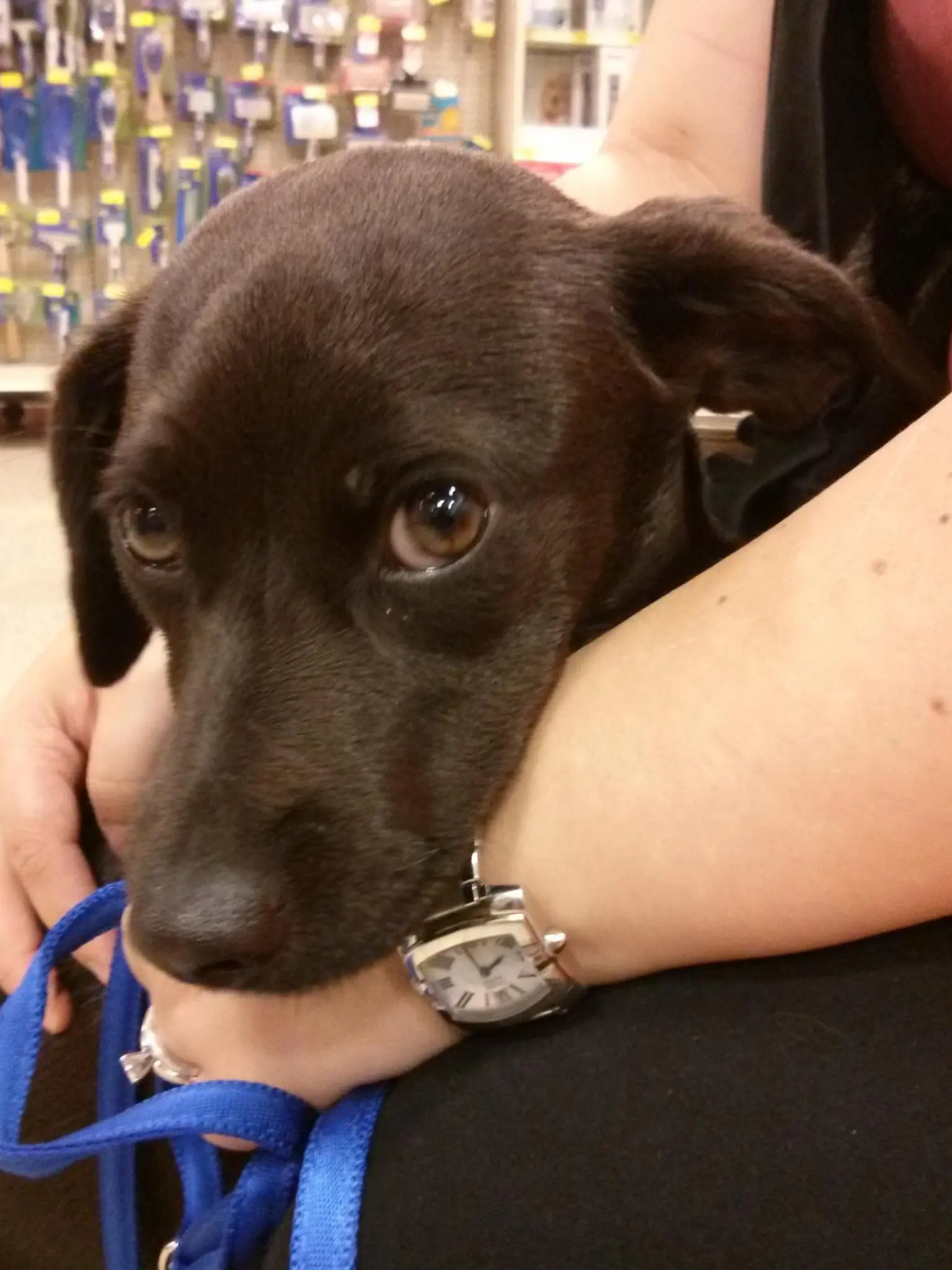
2 Artificially generated; based on low-res original by LDCR
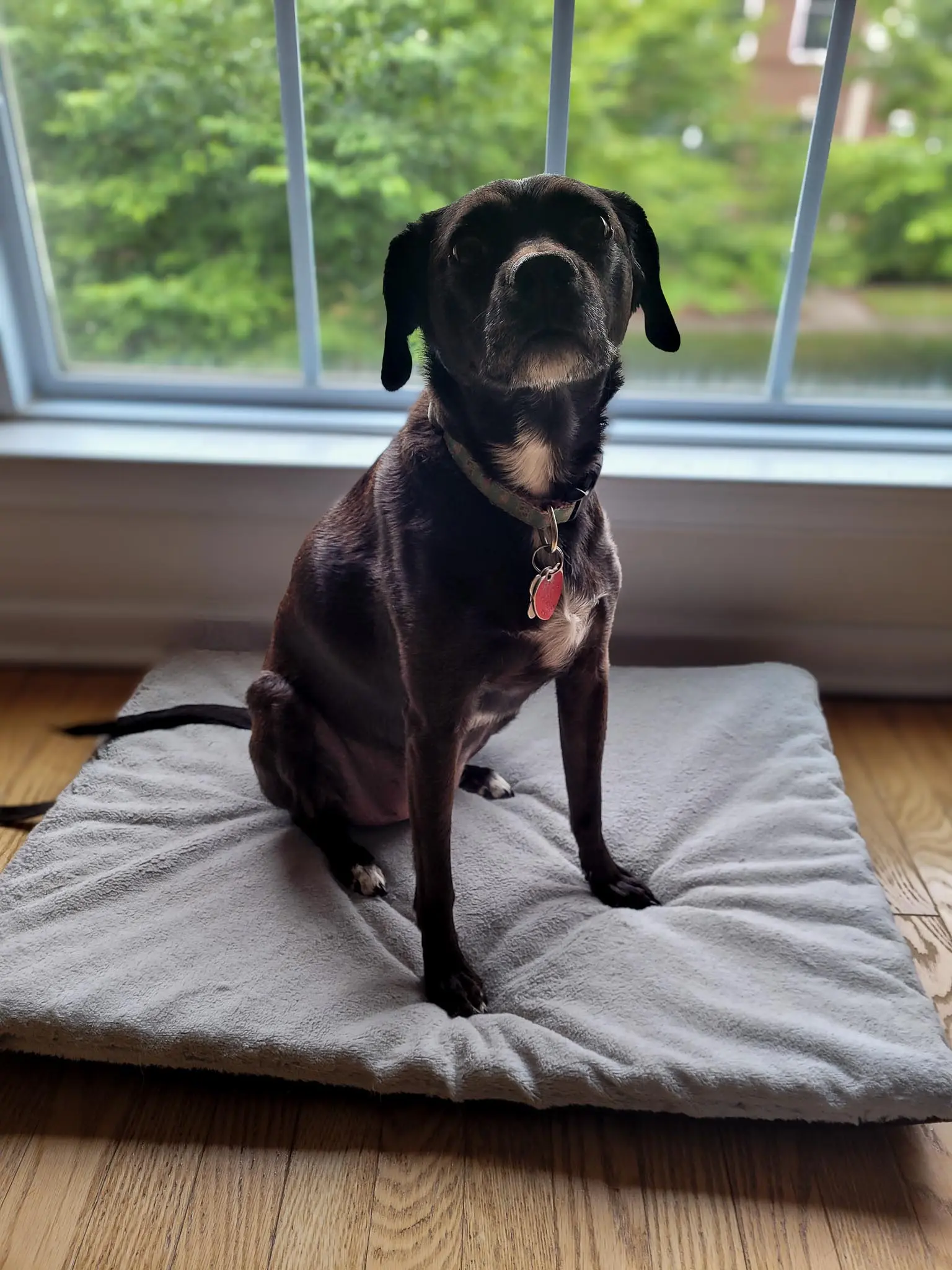
She was a goofy looking thing—small, mostly black with some white splotches on her chest and paws, big bug-eyes, floppy ears, disproportionately long legs, and a kink at the end of her tail. She was curious about us, but skittish. She let Melissa pet her, but pulled away when I tried—a common reaction with dogs that have been mistreated by men in the past. I had almost coaxed her into letting me pet her when Melissa accidentally dropped her purse and Sofia, terrified by the sudden sound and movement, scurried away. We had to go anyway. Melissa said she wasn’t ready to adopt just yet. We thanked the volunteer and left.
Melissa kept talking about Sofia the whole afternoon and evening. Timid dogs just need time to get comfortable in a safe, loving home. Her natural skittishness also meant she would probably back-off when Mei Mei wanted to be left alone. We looked at her listing online where she was vaguely described as a six-month old “chihuahua/terrier blend,” so she probably wouldn’t get too big for our townhome.
Sofia was only the second dog we met, but by the next morning Melissa decided she would be ours. She emailed the rescue group around 11:00 a.m., told them that we “can’t stop thinking about her!” and asked them to bring her to the next adoption event.
We arrived about an hour early on Friday, June 28, 2013. When Sofia came out, Melissa pounced on the poor volunteers to declare her interest. We went off to a quieter corner of the store, spent a few minutes with her, and told them we would take her home. Melissa stayed with the dog while I went to go fill out the paperwork. Before I was done, they had formed a permanent bond. I never had a chance.
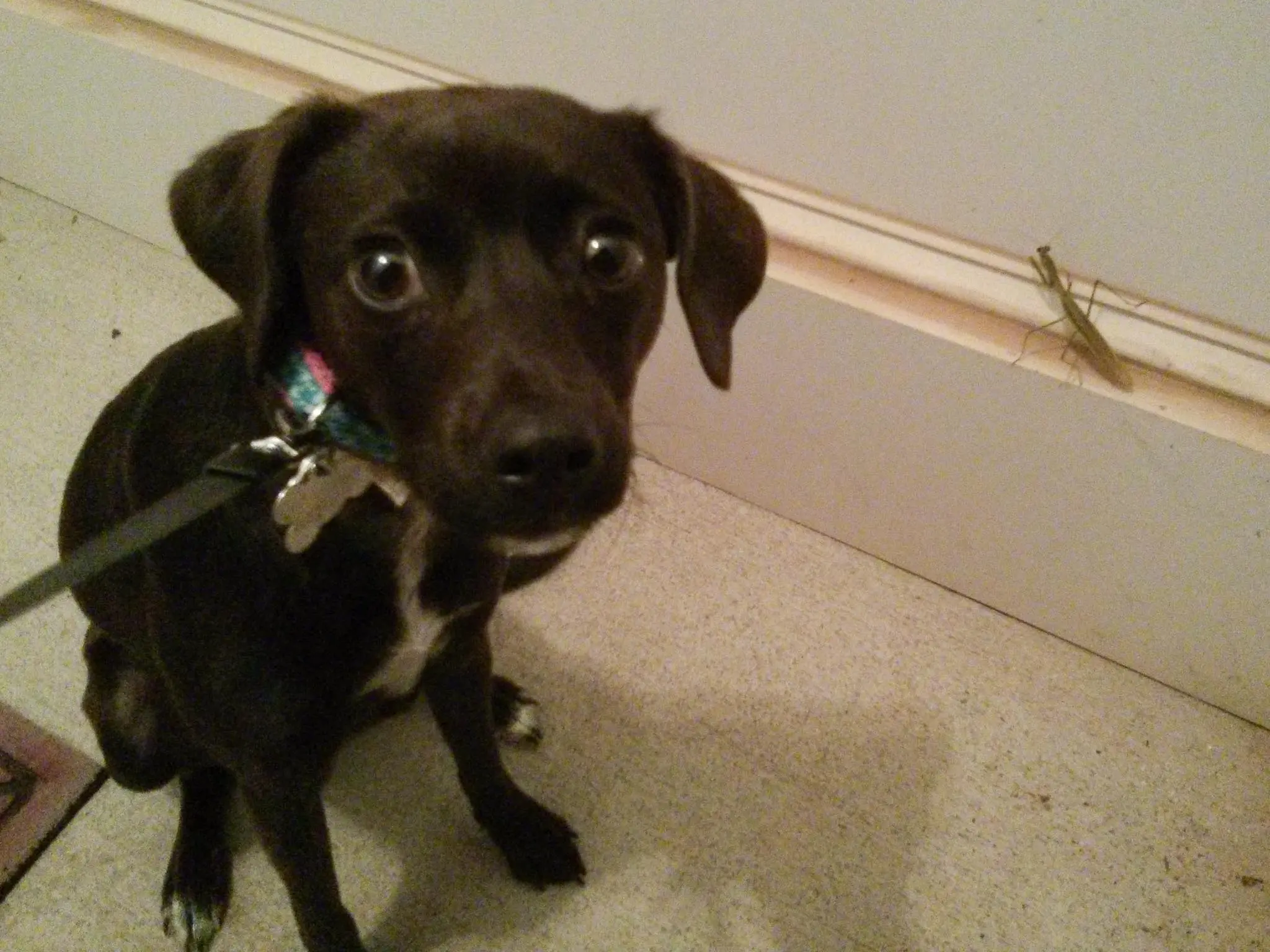
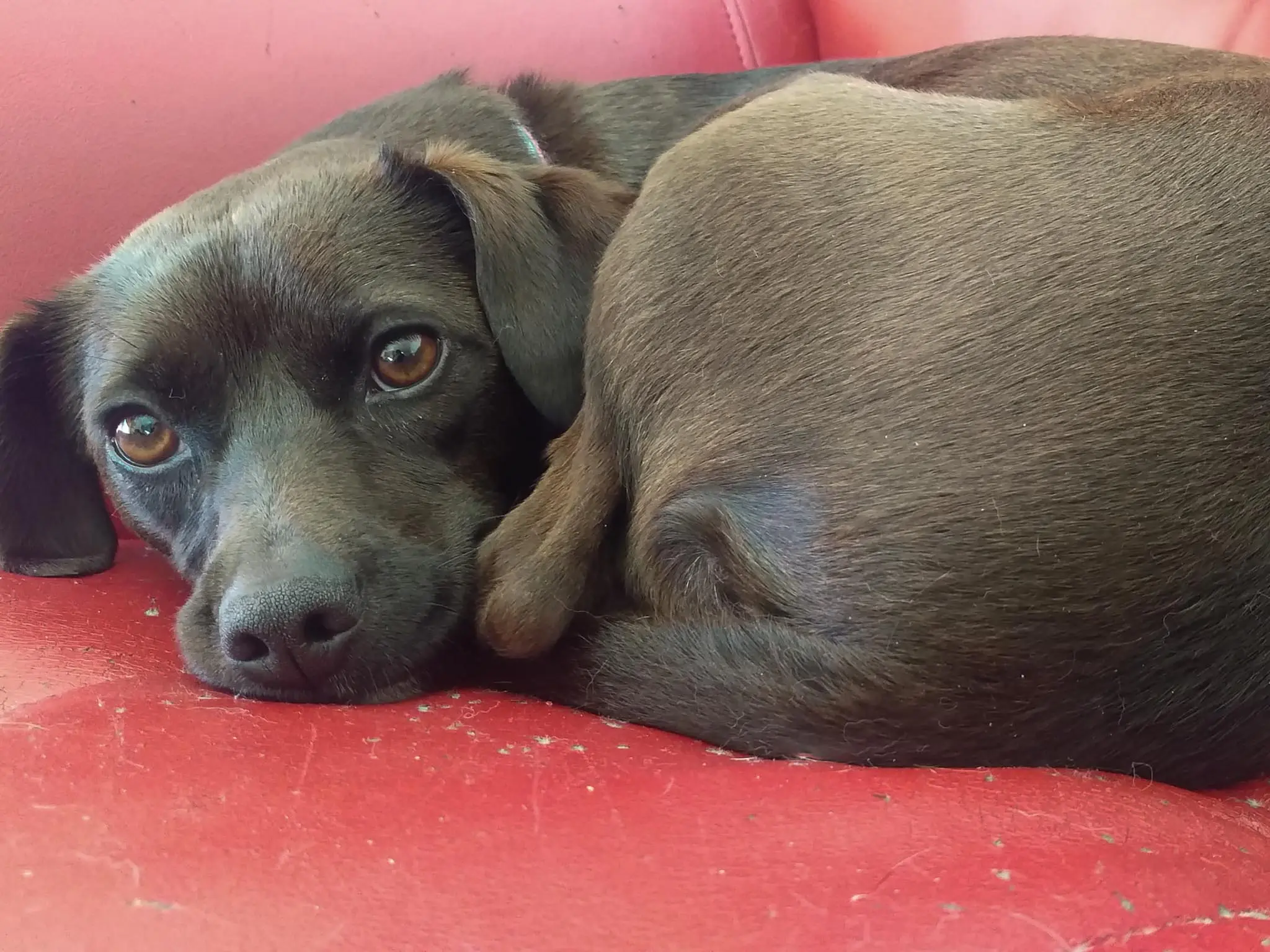
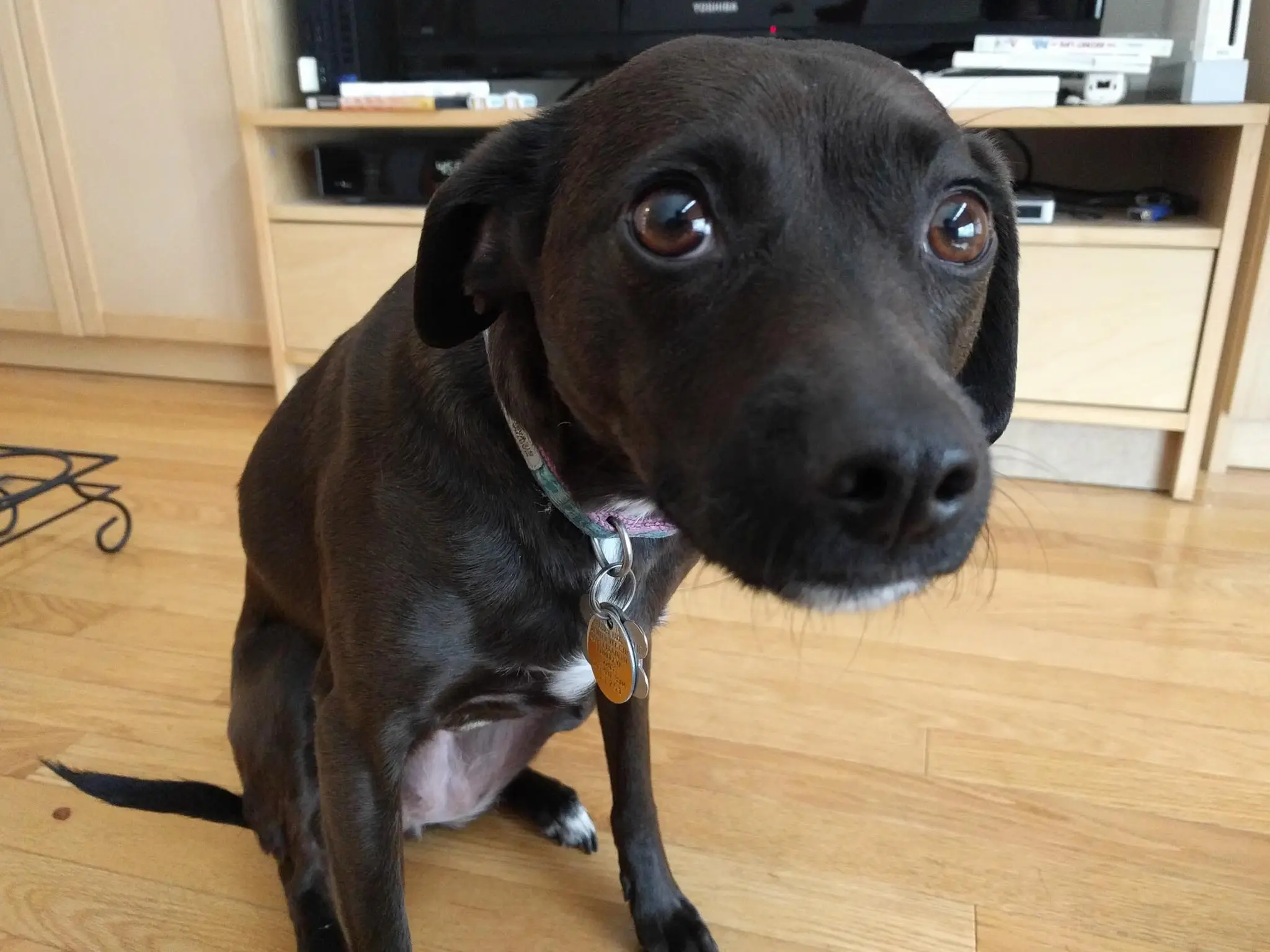
We learned she had been rescued with her mom and litter-mates as strays—“satos”—in San Juan, Puerto Rico. Coincidentally (or providentially), Melissa had recently worked on a project relating to Vieques, Puerto Rico, and had drawn an illustration of a stray that looked a lot like her. Vieques is like a “little sister” to the main island of Puerto Rico; its affectionate nickname is “Isla Nena,” meaning “little girl island.” That inspired us to change her name to Nena.
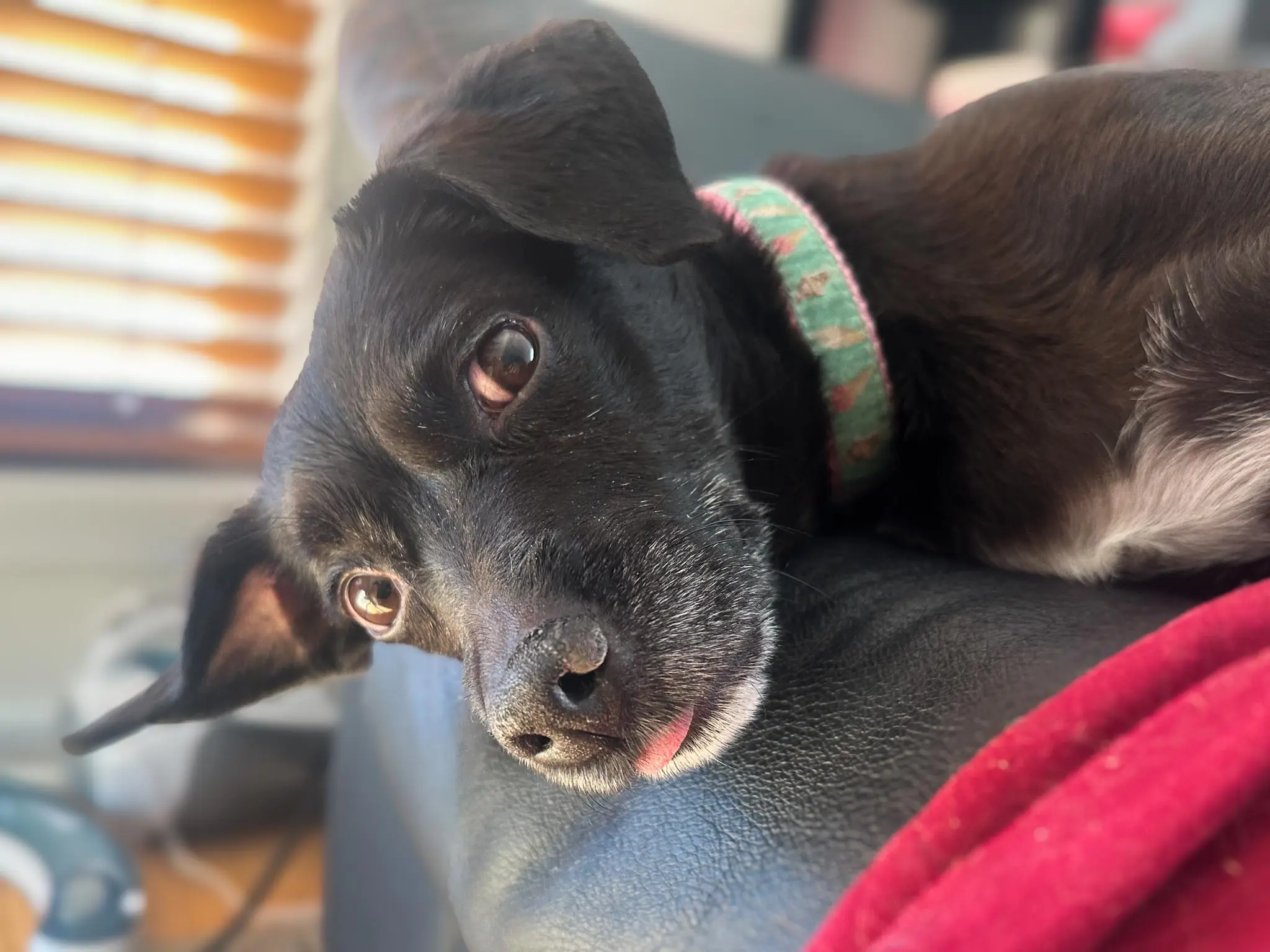
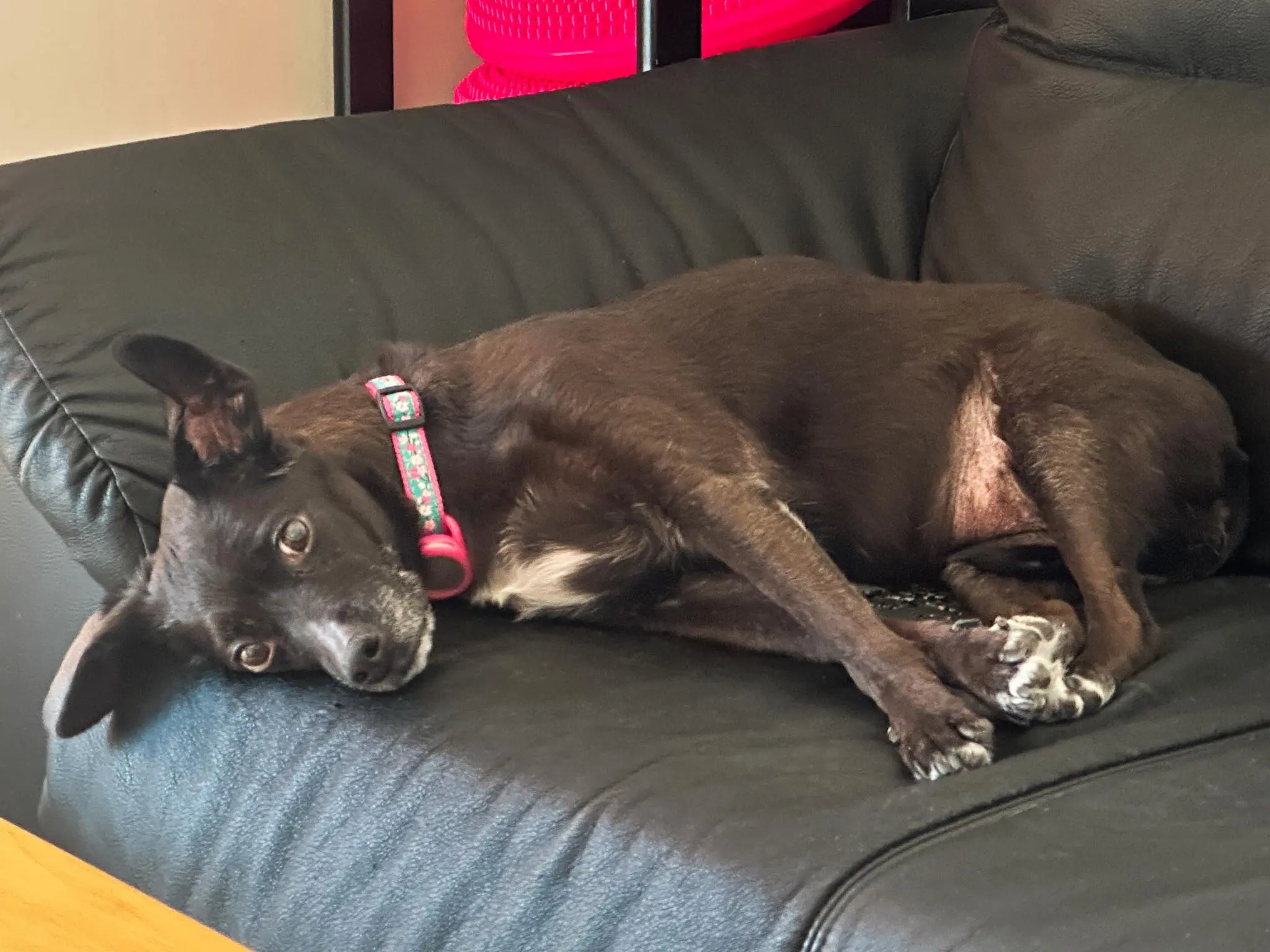
Melissa, of course, had Nena’s complete trust, love, and devotion before I even finished the paperwork. It took a little longer with me, but after a couple weeks she warmed up. With rescues, sometimes they just need a little extra time. She never stopped being skittish in unfamiliar situations, but gained enough confidence to make friends with other dogs in the neighborhood and the important people in our lives. She was smart too; training came easy, but we had to use binder clips to lock her crate because she kept figuring out how to open it.
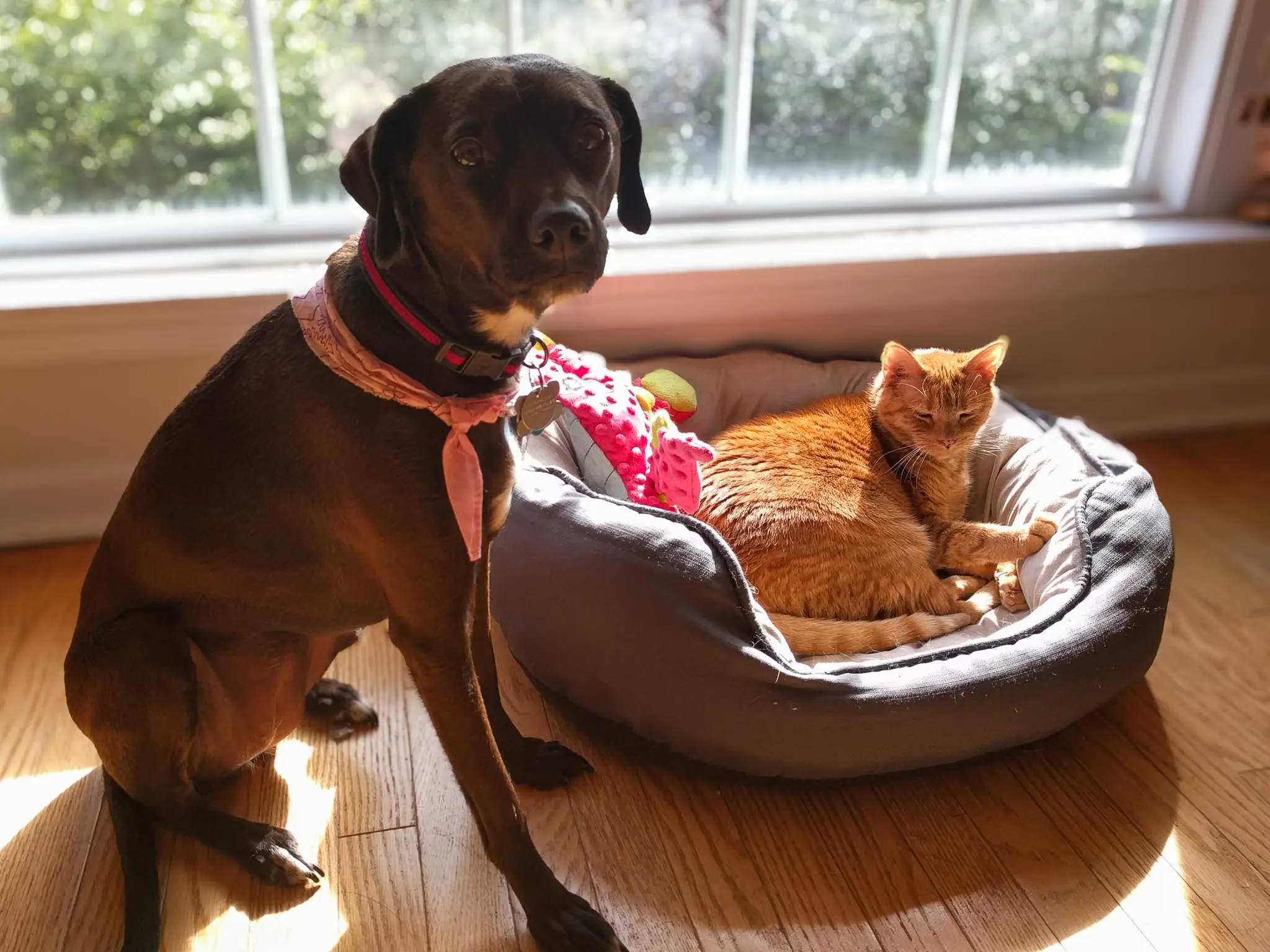
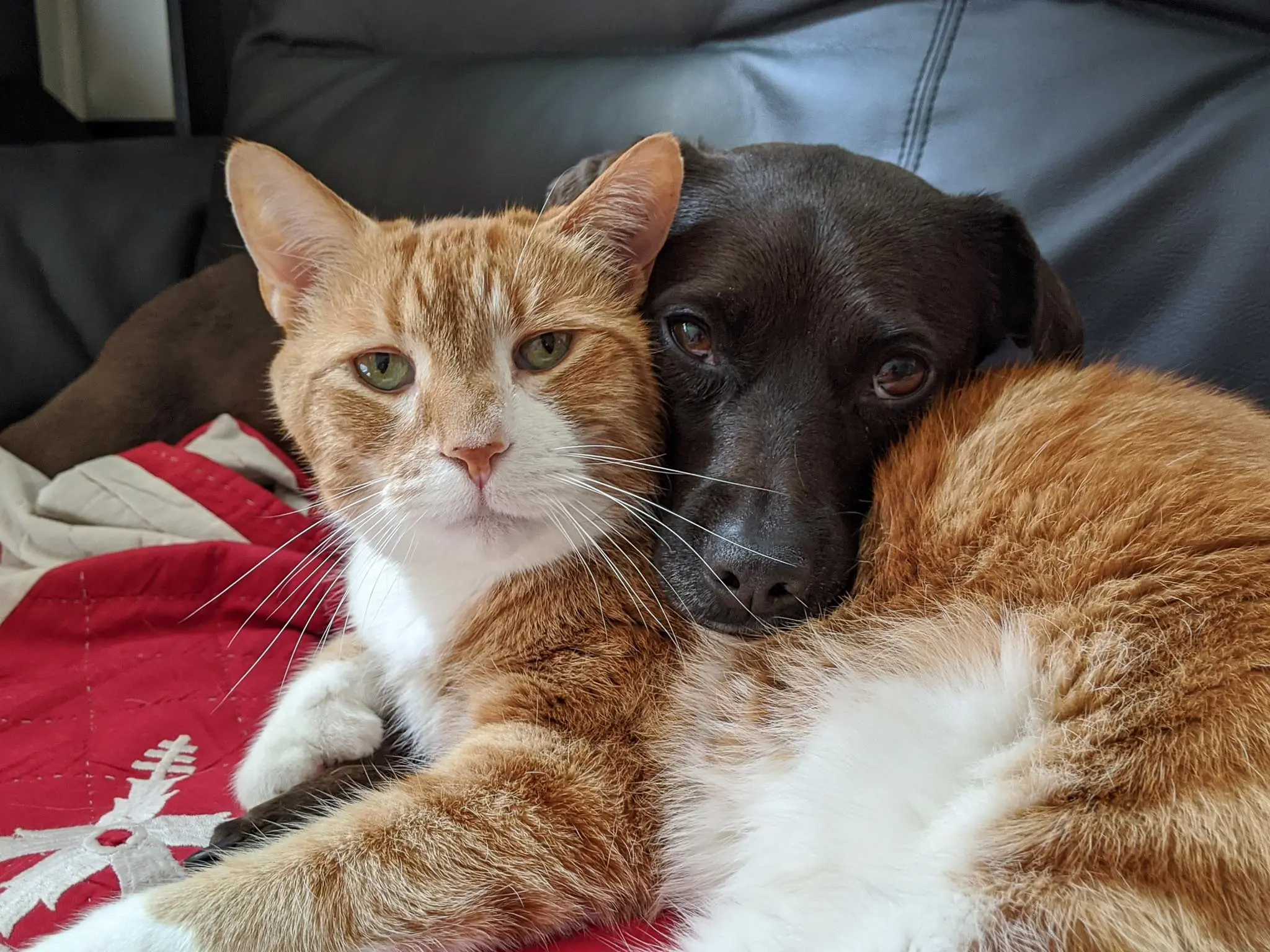
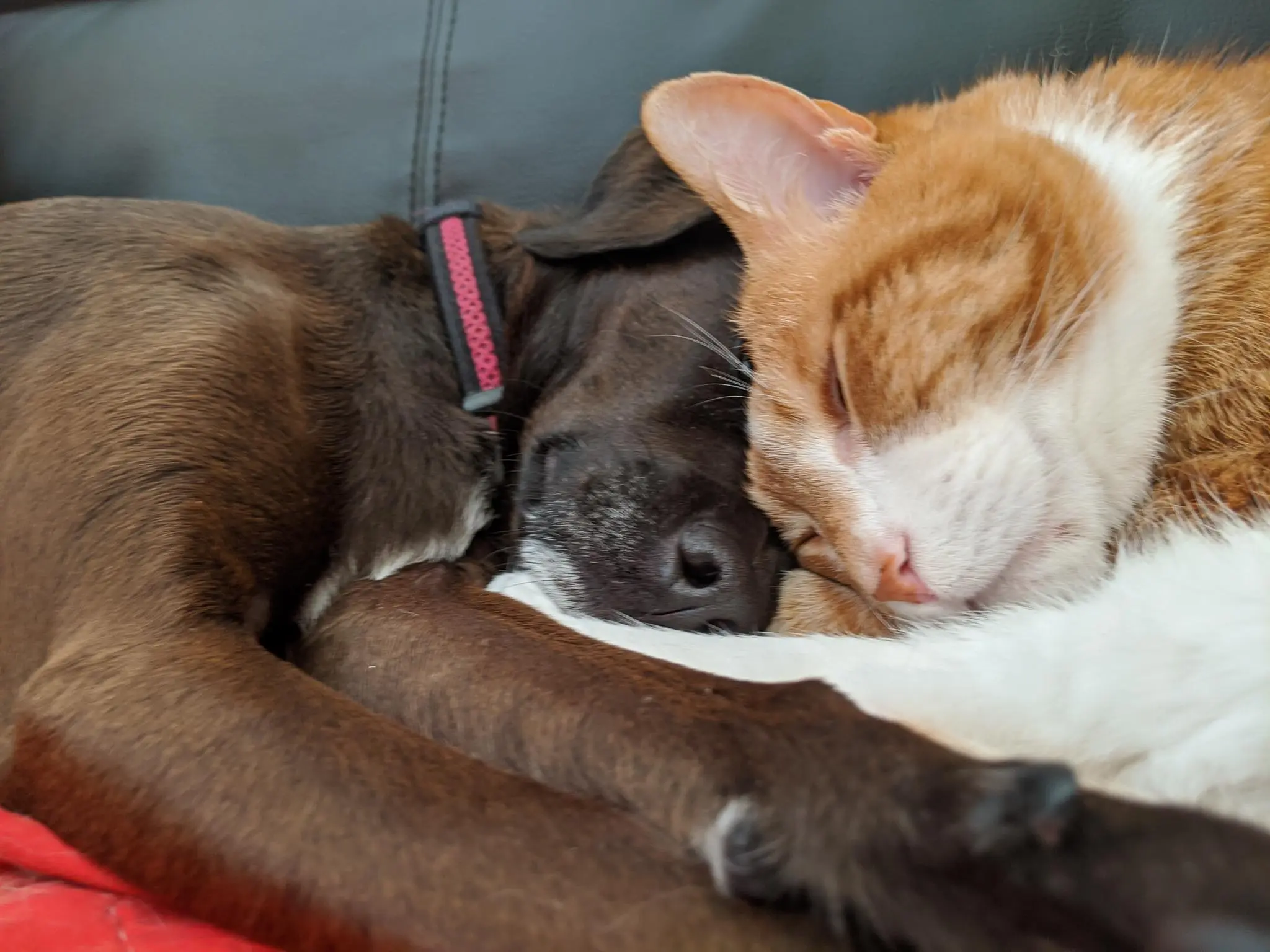
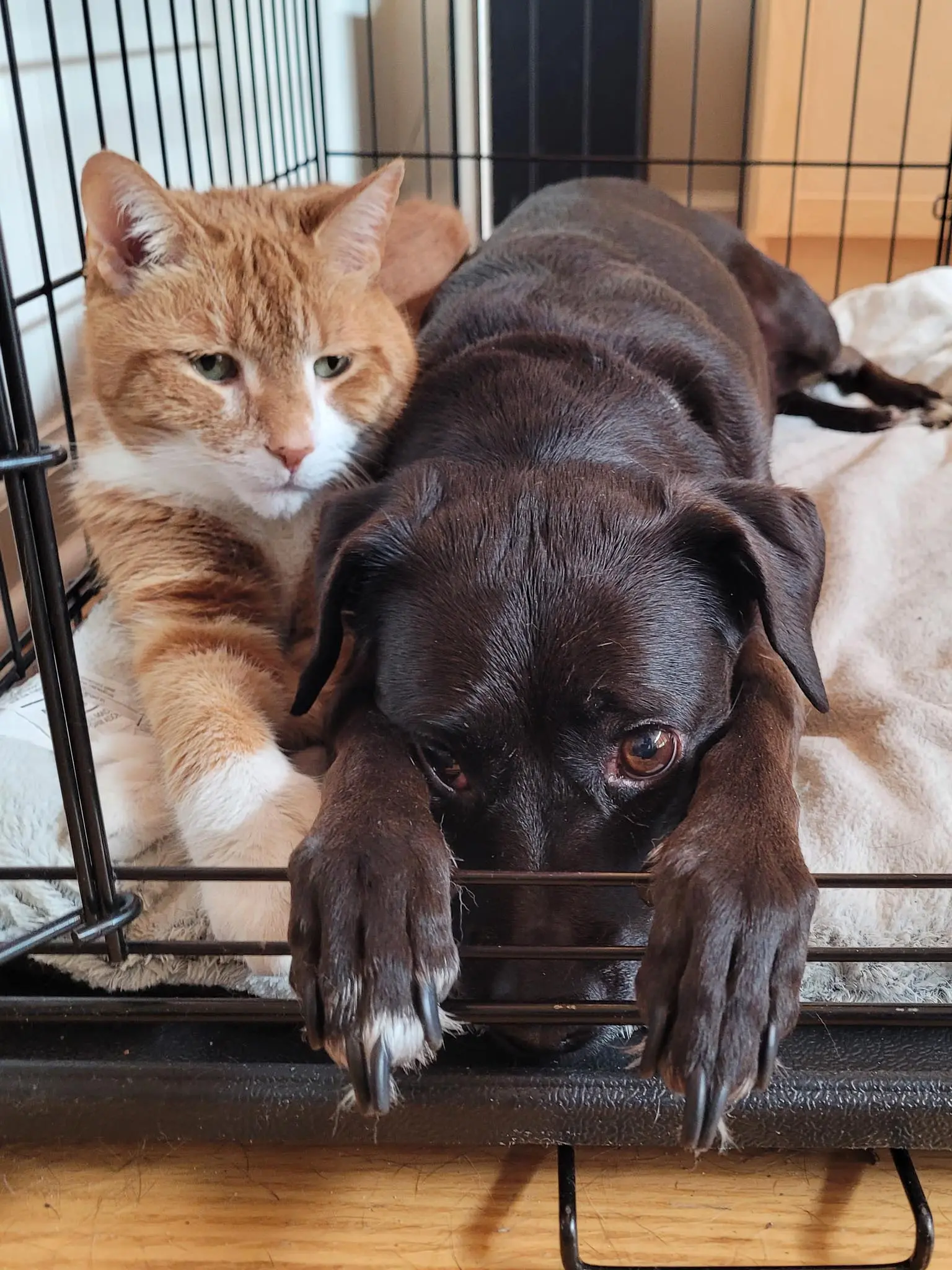
Nena treated Mei Mei with the appropriate level of respect and deference, and they eventually became friends . . . but only on Mei Mei’s terms. Nena and our younger cat Vincent, on the other hand, got very close. Vincent thought Nena was his mother, and Nena thought Vincent was her puppy. She disciplined him when he misbehaved, and cleaned his ears while they cuddled. Some things got messed up in translation—Vincent would purr with happiness, and Nena would think he was growling at her.
A genetic test revealed that Nena was one-quarter chihuahua, one-quarter Russell terrier, one-quarter mixed/unknown hound, one-eighth English springer spaniel, and one-eighth miniature poodle . . . yeah, she was a mutt. For most of her life she was pretty healthy, aside from skin sensitivity and a weak stomach. She had a couple bouts with intestinal parasites (hookworm from Puerto Rico and Giardia duodenalis from the neighborhood). She broke two teeth on a hard chew toy; they had to be pulled and we bought soft toys from then on. That was about it until age began to catch up with her.
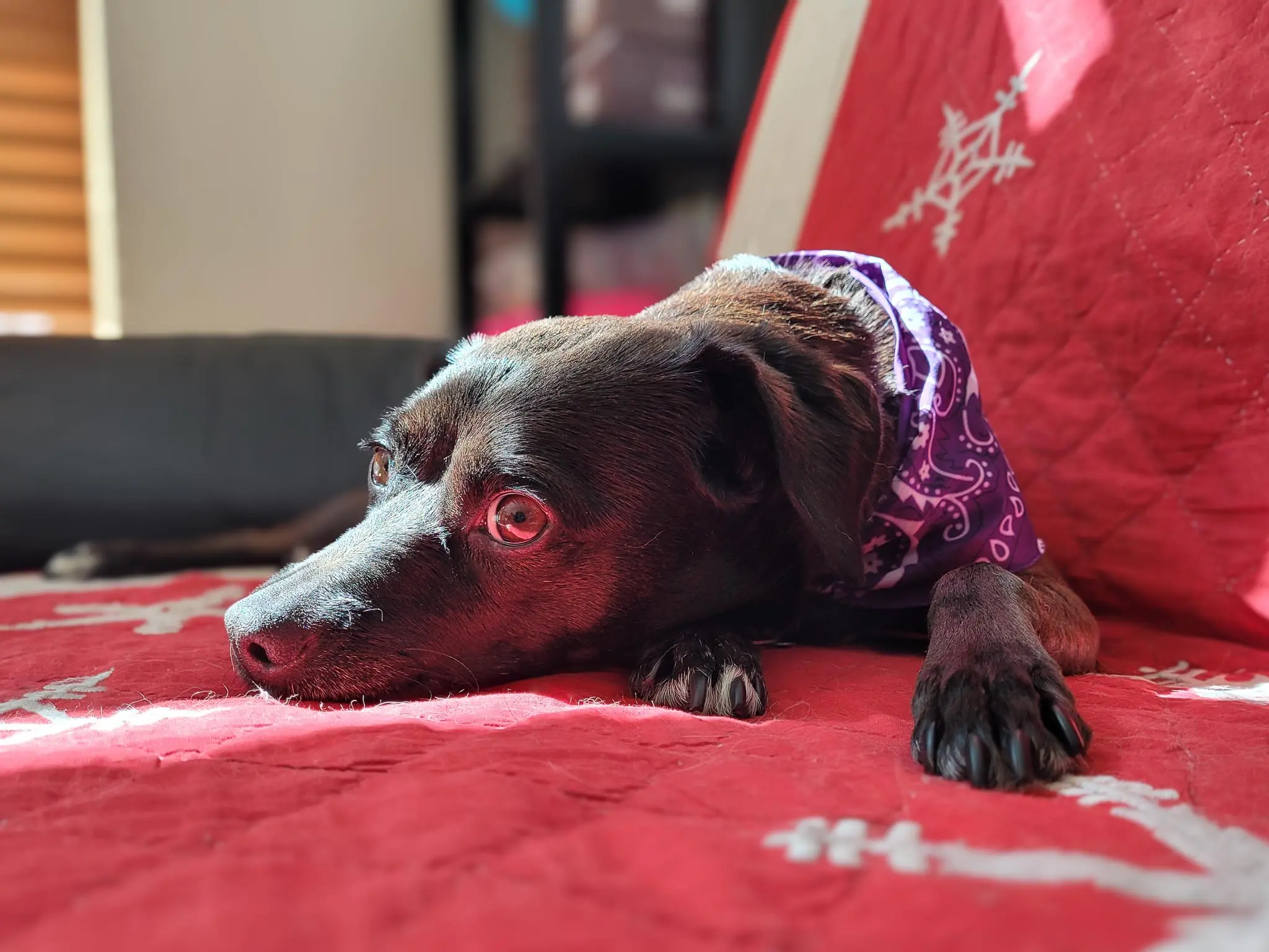
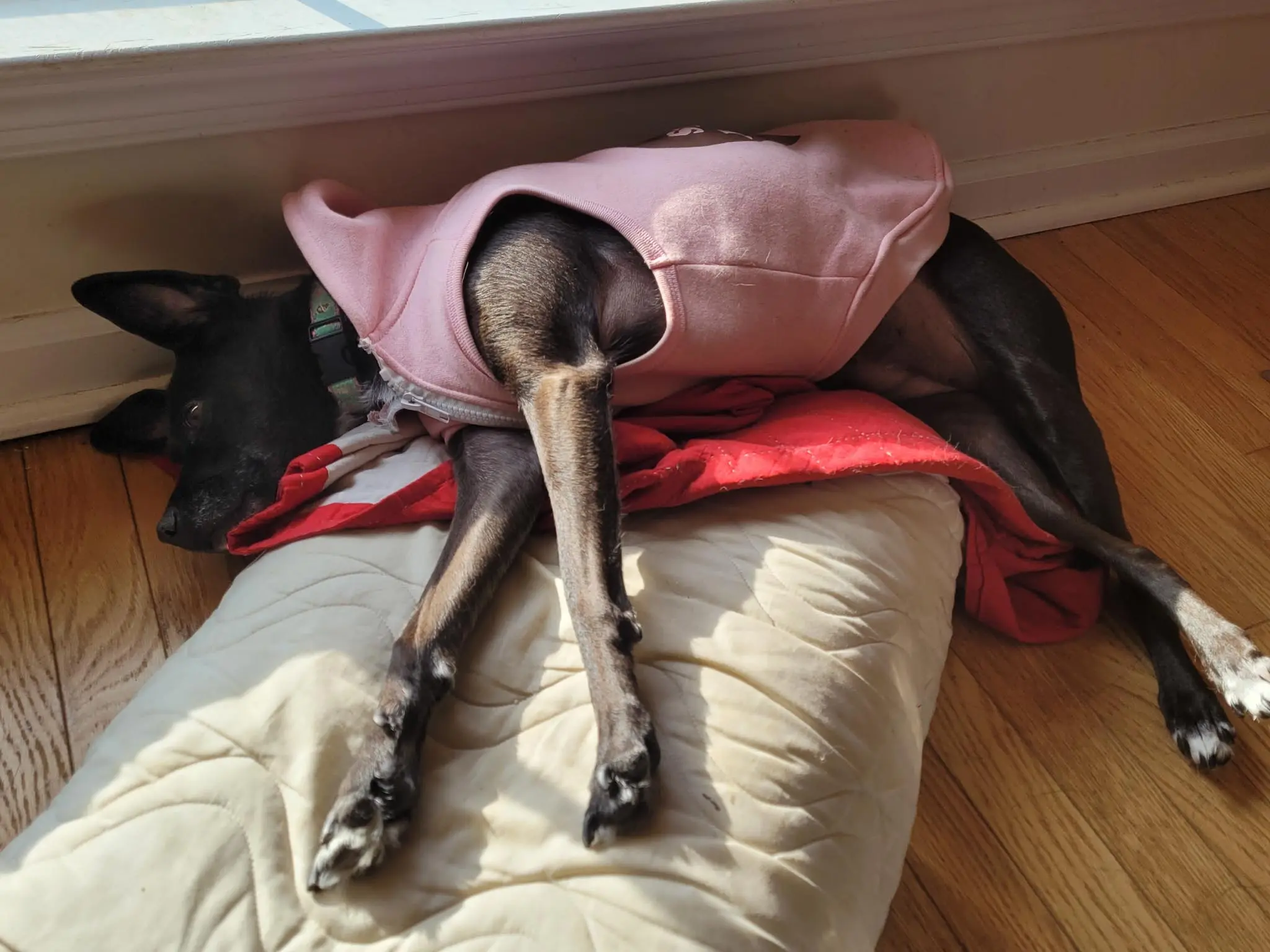
A few years ago we noticed she was excessively thirsty, peeing a lot, and panting even when she was resting in a cool, comfortable place. It turned out she had pituitary-dependent Cushing’s disease—a benign tumor was causing her pituitary gland to make too much adrenocorticotropic hormone (ACTH) which, in turn, made her adrenal gland produce too much cortisol. Basically, her body was in a constant state of stress. We kept it under control with daily medication for the rest of her life.
A while later we noticed she was starting to have mobility problems. They started small—tripping occasionally and not wanting to use the stairs. We thought it was arthritis. It turned out that she did have some arthritis, but the main cause was canine degenerative myelopathy (DM), a neurological disease similar to amyotrophic lateral sclerosis (ALS or “Lou Gehrig’s disease”) in humans. DM breaks down the myelin sheaths around neurons in the central nervous system, reducing and eventually destroying their ability to function. Symptoms start with hind-leg weakness and control problems, then it spreads to the front, worsening eventually to paralysis. Then other body and brain functions start to break down. There is no known cure.
Many dogs only live six-to-twelve months after a DM diagnosis. We were lucky; we got about two years. Her DM progressed slower than average, her relatively small size meant we could carry her when needed, and she handled the symptoms surprisingly well. Her “quality of life” was good even when she was almost completely paralyzed . . . as long as we were responsive enough when she wanted something. She had moments of frustration but they passed quickly. As her condition slowly deteriorated, she just adapted and carried on being the same happy girl she’d always been.
But we knew time was running out. Once she lost her ability to stand, it was only a matter of time before critical systems like the lungs, heart, or brain would start falling apart. We were monitoring her condition and mood closely. We thought she had another month . . . maybe even two.
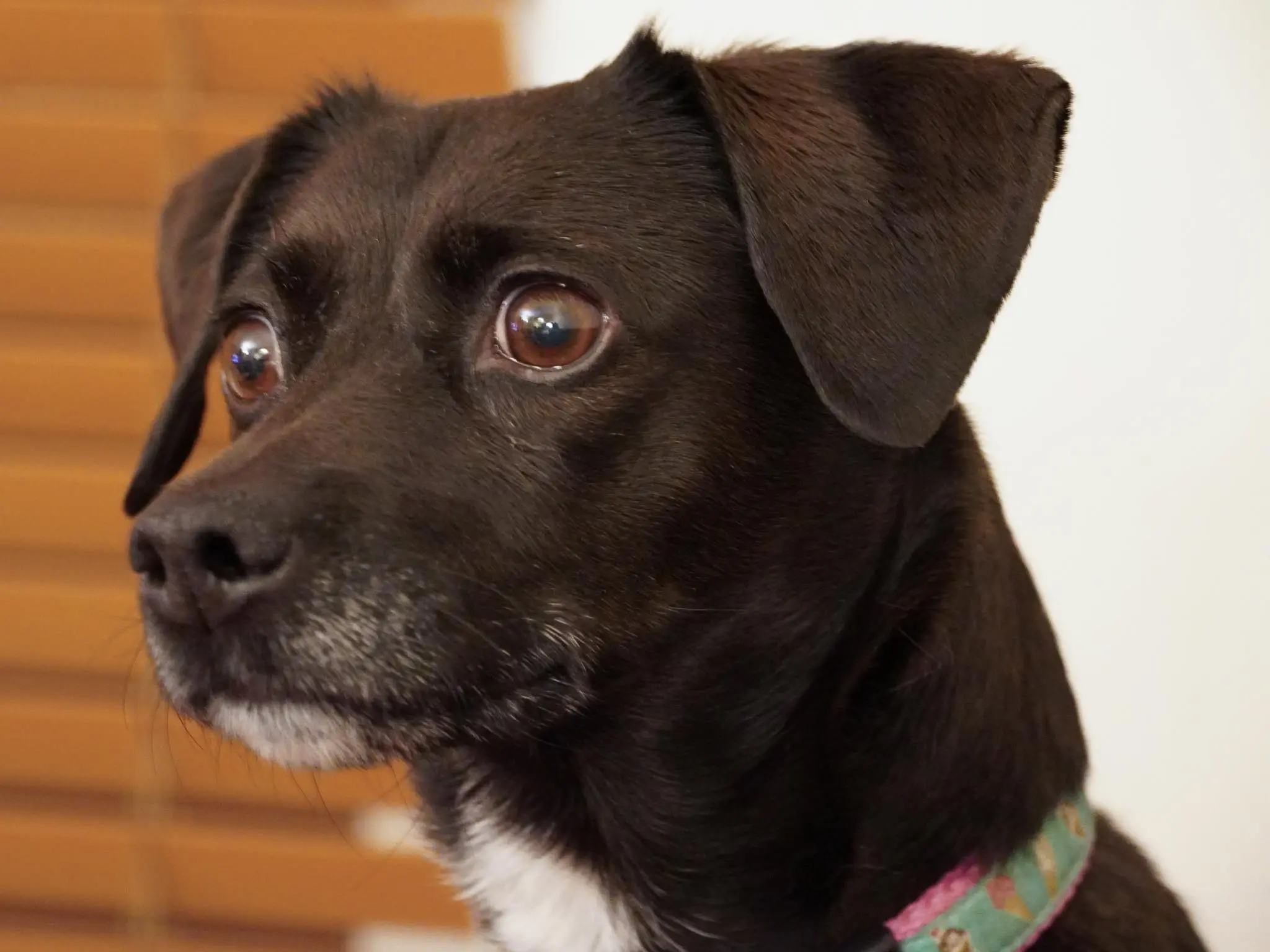
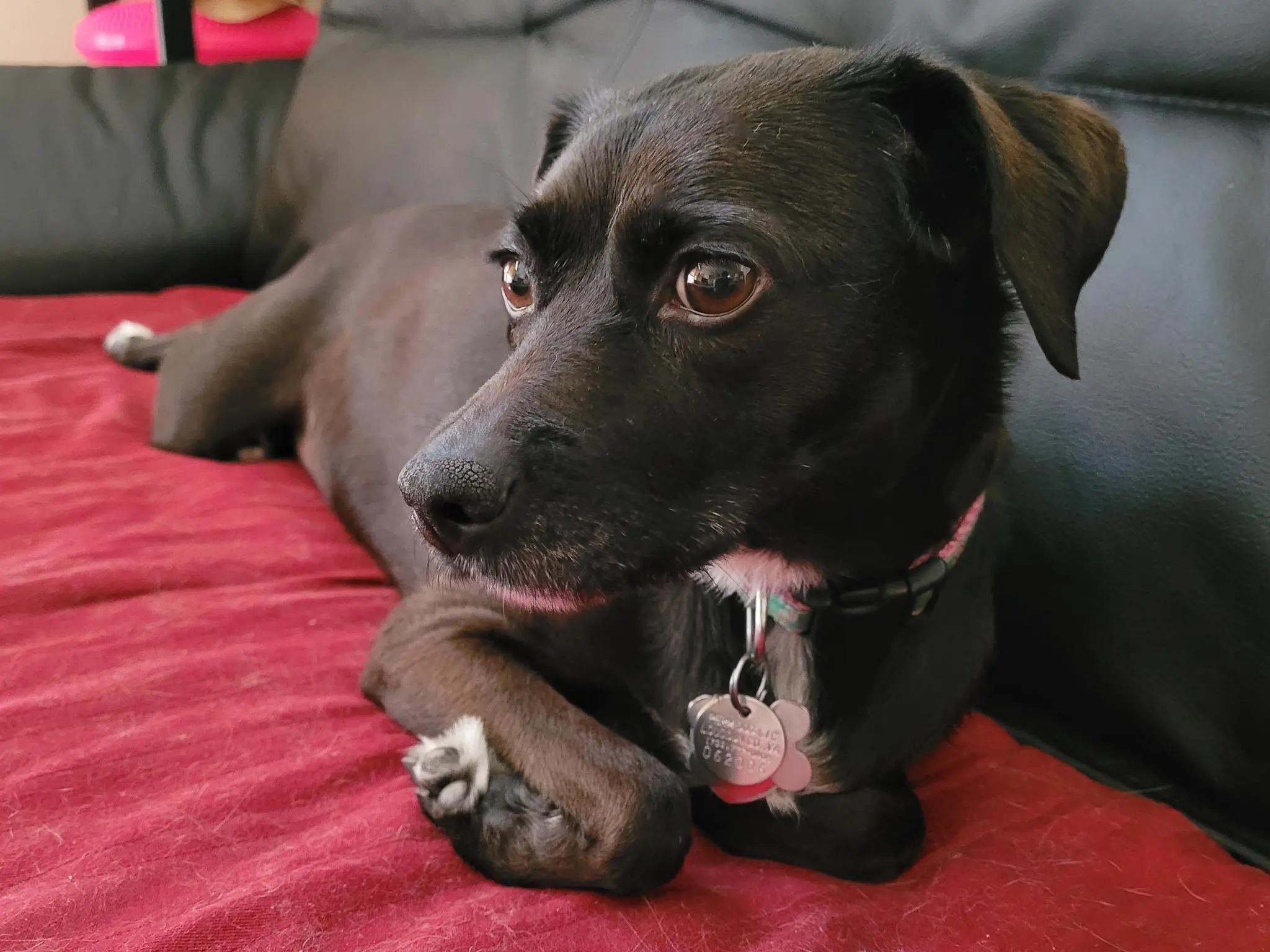
On Sunday, September 20, 2026, she had her usual morning “walk” (carry), ate her breakfast, and had an extra-long early-afternoon cuddle with Melissa. It was a normal, happy day. She started whining a bit early for her evening “walk”—her DM sometimes made it difficult to hold her bladder, so that wasn’t unusual. I only took a couple minutes to finish whatever I was doing, but it was too late . . . she had already peed on the floor, and managed to get it all over herself. I thought it seemed like a lot of pee, especially since she wasn’t very thirsty in the afternoon. As I went to pick her up, she vomited a little. That wasn’t normal, but I just assumed she was upset about being wet or got something gross in her mouth.
I took her upstairs to give her a bath while Melissa cleaned the floor. During the bath, I noticed she swung her head around a little oddly when I flipped her over. I thought I made her dizzy by flipping her too fast. In retrospect, I realize I was missing signs—little things that meant nothing on their own but added up to something bigger. Maybe, subconsciously, I just didn’t want to see them.
I took her out of the bathtub and she did that odd head-swing again. It started dawning on me that something might be wrong, and while I was drying her off I finally saw what it was: Her eyes were darting from side-to-side in an unnatural, uncontrolled, rhythmic cycle. It wasn’t a seizure; she was conscious and responsive. I tried to stand her upright to see if that would help, but she just swung her head around wildly in an effort to counteract what her eyes were doing and keep the world still.
I laid her back down and finished drying her off, then moved her to her favorite spot on our bed. She calmed down. I took a deep breath and started processing things. I knew we would have to take her to the emergency vet . . . and I knew she probably wasn’t coming home. I called for Melissa to come upstairs, and she quickly reached the same conclusion. We both cried. She called the vet to tell them we were coming. I got the car ready and loaded Nena up.
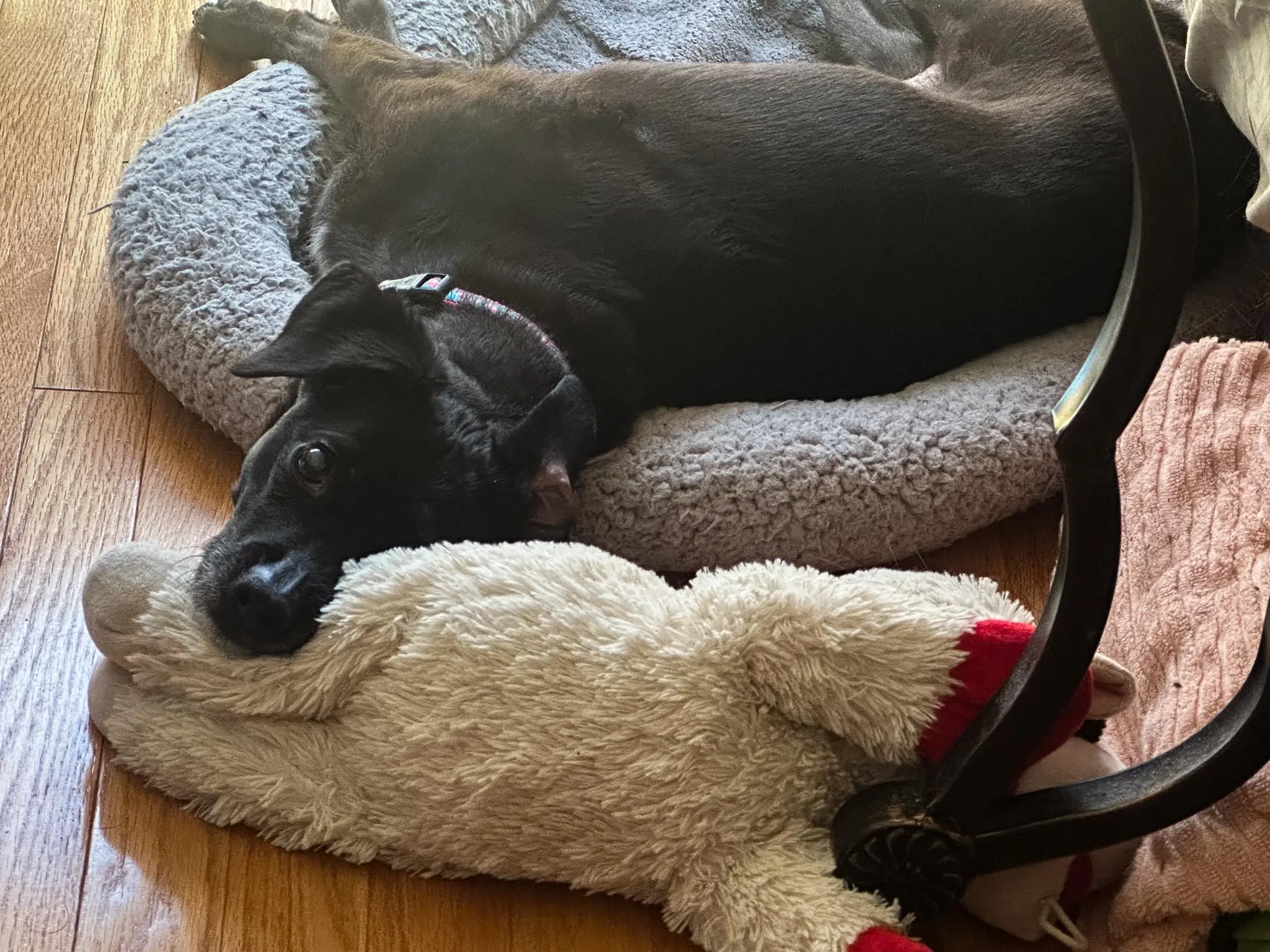
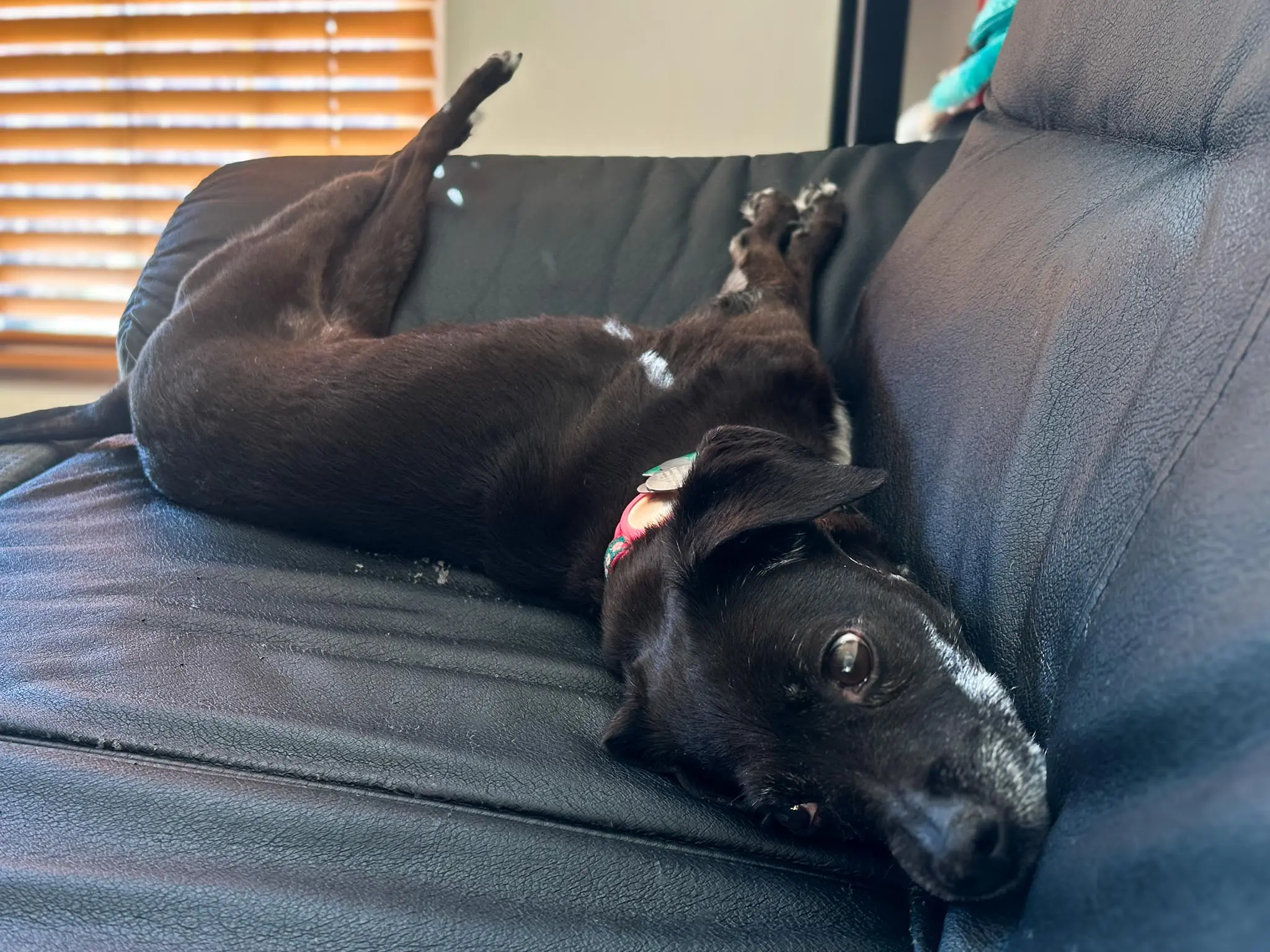
Uncontrolled eye movement, or nystagmus, can be triggered by many vestibular and neurological conditions. In Nena’s case, it probably meant her DM had finally pushed her nervous system to the breaking point. The vet confirmed what we already suspected: There wasn’t anything they could do. And we knew Nena would not be happy if she couldn’t even look at things and maintain a sense of orientation. In less than two hours she had gone from “okay” (relatively speaking) to “not okay.” It is always difficult to euthanize a pet, but I am grateful that there were no agonizing gray-areas. This crossed a clear, bright line.
We moved to a comfortable, quiet room—the same one where we said goodbye to Mei Mei. Nena laid on her favorite blanket while Melissa and I petted her, gave her treats, and talked to her. With the lights low and the comforts of familiar sights and smells, the constant eye movement didn’t seem to bother her so much. She relaxed. She gave us kisses. And she cuddled with Melissa, which was always her favorite thing to do, as she drifted off to sleep.
This is the worst part of life with pets. I hate it.
Because every pet is unique, we love each one uniquely . . . and when we lose them, we grieve them uniquely. After a while, when we’re ready, we’ll do it all over again. The joys outweigh the pain. But the uniqueness of each pet means new ones don’t replace the old. We will love some new dog just as much, but it will be different. There will never be another Nena.
Goodbye, Nena. Good dog.