Tipping: A Silly Tradition, But Do It Anyway

It is customary to tip most people who do stuff for you. Waiters and waitresses are an obvious example, but you’re also supposed to tip doormen, valets, maids, delivery folks (pizza, etc.), and more. Since tipping is customary in these situations, you should do it. People in most of these jobs are grossly underpaid, wage wise, since their wage structure assumes that tips will make up the difference. In many cases, the federal and state minimum wage laws do not apply (or, at least, do not apply in full) to people who can be reasonably expected to receive tips.

Having said that, I think we should stop making tipping customary. It’s an annoying, largely useless tradition. When I pay the bill at a restaurant, I have paid for the food, the wages of those who cooked it, and the wages of those who served it. The way it should work is the actual, list price of restaurant food should be increased (say, 15 percent), servers’ wages should be increased to a fair amount for the job they do (minimum wage or higher), and the whole tipping process should dissolve into oblivion. Good service is a reasonable expectation, and the way to punish bad service should be to report it to the manager (so the server, if bad service is a pattern, can be terminated). If we really don’t want to let go of the silly tradition, then permit tipping in cases of exceptional service (say, a going rate of 5 percent) but it should never be expected or necessary.

I Hate Hot Weather . . .

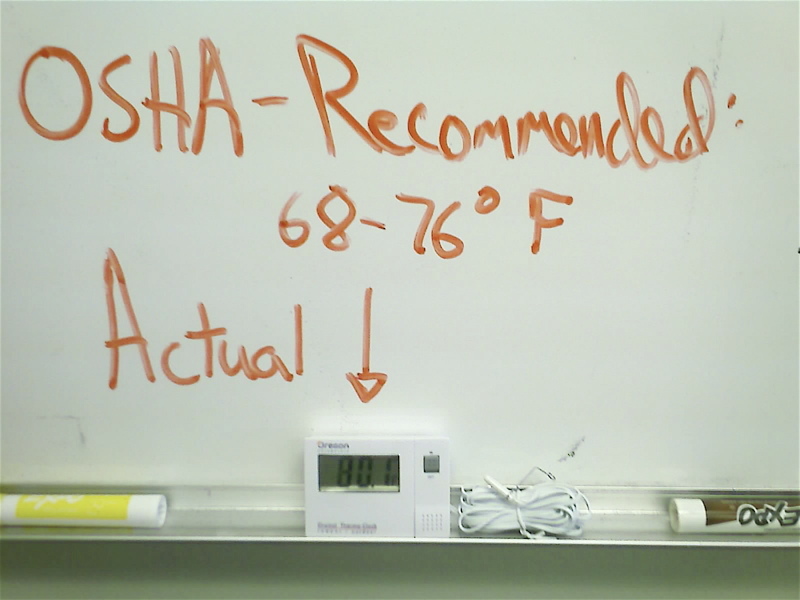
 . . . but I especially hate hot weather indoors. My employer is located in a building ‘managed’ by Cambridge Asset Advisors L.P., and it seems to be the only building in the country that has an air conditioning system but isn’t maintained in a moderately comfortable state by the building managers. As a small protest, my office white board now has the OSHA recommended temperature range (68-76º Fahrenheit) and, just below it, the current office temperature. Today, it’s 80.1º Fahrenheit in my office—4.1 degrees above the temperature range OSHA recommends. Given that Cambridge has been aware of temperature issues in this building for more than two years now, I figured it was time to call them out on their gross incompetence.

The AIDS Reality

The Aquired Immune Deficiency Syndrome (AIDS) is a terrible disease. Caused by the Human Immunodeficiency Virus (HIV), the disease has become an epidemic in parts of the world—particularly in Africa and in certain inner-city communities in places like Washington, DC. While there had been long-term concern about AIDS becoming a worldwide pandemic, perhaps with the potential to decimate the species, the reality has not been nearly so bad (except, again, in certain places). The Independent reports that the World Health Organization (WHO) now admits there will likely be no AIDS pandemic in the heterosexual population outside of Africa.

The AIDS epidemic in the United States kicked-off by primarily affecting homosexual communities, leading to its erroneous categorization as a ‘gay disease’ in the early days. While AIDS is not a ‘gay disease’, the nature of the disease does indeed cause it to spread easier and faster through sexual transmission in homosexual communities than in heterosexual communities. This is not ‘anti-gay’, this is a scientific fact. Sexual preference has no affect on nonsexual transmission through tainted blood, needle sharing, or to a child during pregnancy.

The Approaching Storm

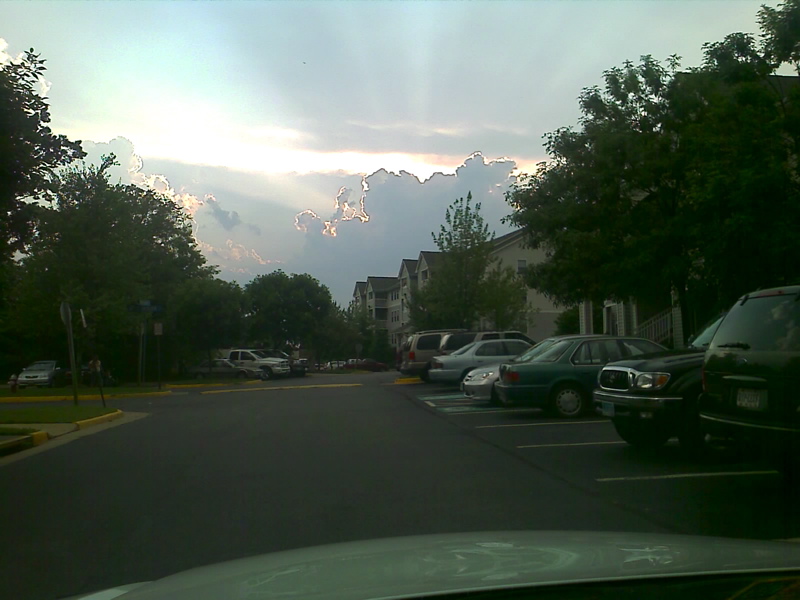
I’m a big fan of thunderstorms (as long as they don’t escalate into tornadoes) and, personally, I think that the storms produce some of the most beautiful spectacles of nature. The cloud formations, the lightning, the sheer power of it all is wonderful to watch. Since I hate hot, humid weather, DC, thunderstorms are the single redeeming quality of DC summers. We’ve had a few doozies over the last week or so—including a batch of tornados—but I took these pictures as a simple, run-of-the-mill, pop-up thunderstorm rolled through this afternoon.

Scott Bradford is a writer and technologist who has been putting his opinions online since 1995. He believes in three inviolable human rights: life, liberty, and property. He is a Catholic Christian who worships the trinitarian God described in the Nicene Creed. Scott is a husband, nerd, pet lover, and AMC/Jeep enthusiast with a B.S. degree in public administration from George Mason University.