Since last summer, I’ve had an AT&T 8525 wireless phone. This phone, also known as the HTC TyTN HERM100 (say that three-times-fast) originally shipped with Windows Mobile 5, but an official ROM update ups it to Windows Mobile 6 Professional. I selected the 8525 as the lesser of many smartphone evils. At the time, the iPhone (which had just come out) did not support third-party software, Blackberrys had no reliable synchronization software available for Mac, Palm OS was hopelessly antiquated, and no Symbian smartphones were available through AT&T. Windows Mobile was my best choice at the time.
Today, with the iPhone supporting third-party software and Missing Sync available for Blackberrys, I might have selected a different phone. But this is what I have, and will continue to use until I’m eligible for a cheap upgrade in December. I can say, however, that my experience with Windows Mobile has been much like my experince with Windows on the desktop: it’s capable and powerful, but hobbled by reliability and usability problems. With smartphones across the industry upping their game, I’m unlikely to subject myself to Microsoft’s operating system again come December. Preliminarily, I’m looking at the iPhone, Blackberrys, Symbian, or—assuming they’re available in time—Android-based phones.
I can’t recommend Windows Mobile at this time. My phone shifted all my scheduled appointments by an hour when the time changed in the spring, periodically forgets to repeat my repeating tasks, and has a number of other goofy problems along those lines (mostly with simple PIM functions that even free Motorola phones can handle). But through the addition of various third-party products, the phone can be made pretty usable and, occasionally, even awesome.
Read more . . .

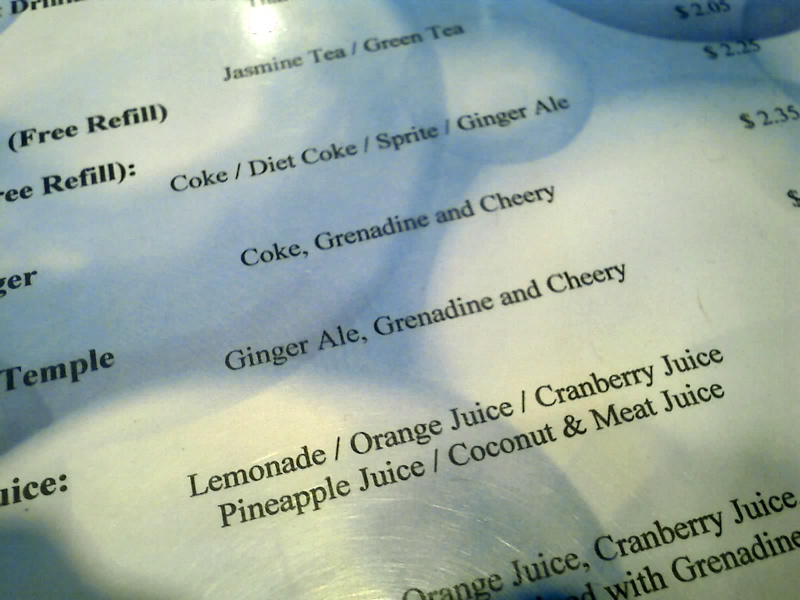 Melissa and I had dinner last night at a nearby Thai restaurant that we enjoy, and had to have a laugh at the drink menu. In fact, I just submitted this photo to the ever-hilarious English Fail Blog. I can’t decide which part I find more humorous: the twice-misspelled word ‘cherry’ (printed as ‘cheery’) or—the part I didn’t even notice until reviewing the photo at home—the ‘Coconut & Meat Juice’.