Flight 1549 Crash-Landing Videos

I wrote just a couple days ago about the expert flying exhibited by U.S. Airways pilot Chesley B. “Sully” Sullenberger III, who successfully guided his crippled Airbus A320 (U.S. Airways flight 1549) to an nearly-unprecedented safe water landing in New York’s Hudson River.

Now we are beginning to see the first raw video of the event (included here via LiveLeak.com). First, the grainy videos of the crash itself:

The Wiretap Vindication

I’m not going to spend a lot of time on this, since I’ve covered it before. Like it or not, in a time of war the president has fairly broad powers to protect the people of the United States using means (like warrentless wiretaps) that might be illicit in peacetime. Every president who has led us in times of war has used these powers—Republican or Democrat—and was completely within their rights to do so.

The liberal left—who don’t seem to mind that one of their heroes, President Franklin D. Roosevelt (D), authorized the war-time internment of certain Japanese, German, and Italian persons right here in the U.S. under Executive Order 9066—seem to go into fits of spasms over President George W. Bush’s (R) approval of very limited wiretapping of potentially terrorism-related phone calls. Recording some suspicious phone calls seems to be quite a bit less intrusive than the complete suspension of Japanese-Americans’ civil liberties, but such is our partisan world. Either might be morally wrong; neither is illegal in war time.

The Wall Street Journal printed an editorial today bringing to light a story that most other media outlets have ignored. Most critics of these wiretaps have claimed that Bush was required to get permission to perform these wiretaps from the Foreign Intelligence Surveillance Court (‘FISA Court’) established under the 1978 Foreign Intelligence Surveillance Act. The court itself just released a (highly-redacted) ruling disagreeing and re-affirming the President’s war-power authority to gather foreign intelligence without any judicial involvement, even when one end of the call is in the United States.

Hopefully we can put this tired, baseless issue to rest now.

Kudos to Chesley B. “Sully” Sullenberger, III

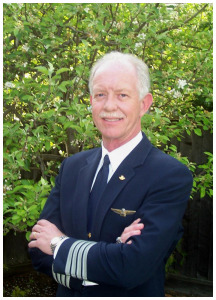
0115093hero1Lots of people owe Chesley B. “Sully” Sullenberger III a profound ‘thank you’.

Sullenberger was at the controls of U.S. Airways Flight 1549 which took off from New York’s LaGuardia Airport headed for Charlotte, North Carolina, earlier today. Within a few minutes after the flight began, the Airbus A320 airliner collided with a flock of geese which damaged both engines and crippled the craft.

Sullenberger attempted to return to the airport, but it soon became clear that the plane—with no power and little altitude—would not make it. Faced with very, very limited options, the pilot made the decision to ditch the aircraft into the Hudson River between New York and New Jersey.

Miraculously, every single one of the 155 passengers and crew survived. There were some minor injuries, and some who were exposed to the frigid water had to be treated for hypothermia, but every last soul aboard was rescued and will live.

While ditching in water is, indeed, a part of every commercial pilot’s training, it is a ‘last resort’ maneuver. People have survived these kinds of landings, but until today it had never been done in a commercial jet airliner without a loss of life. Circumstances were on Sullenberger’s side—proximity to the river when the event occured, and relatively calm conditions on the river—but there is no doubt that his consummate skills as a pilot saved lives today. God bless you, Capt. Sullenberger.

As for the bird strike itself, it’s not uncommon for birds to collide with aircraft. It is, however, very rare for bird strikes to completely disable a multi-engine aircraft. Geese are big, mean-spirited birds that travel in packs though, so it’s not too surprising.

Software Licensing and Consumer Rights

One of the most controversial issues in the technology field is the issue of software licensing. As you may be aware (though I’m sure many of you are not aware), software companies claim that when they sell you a piece of software they’re not actually selling you anything except a license to use that software. That’s why you get prompted when installing most software to agree to its license terms—often called an End-User License Agreement (EULA)—and these companies claim those license terms equate to a binding contract and you cannot use that software in any way that goes against those terms.

Of course, things aren’t that simple.

The problem for software companies is that there is little or no precedent for their argument. Software is copyrighted work—just like a novel, a CD of music, or a film on DVD—and as such the author/creator of that work has certain rights under copyright law. They have a sole right to the ‘first sale’ of that work or to license that work to others for sale. They have a sole right to create ‘derivative works.’ They have a right to prohibit others from copying and selling (or giving) that copy to others. This is all without serious dispute.

But the recipient of a copyrighted work—the consumer—has rights under copyright law too. They can make as many copies as they want for personal use (e.g., you can photocopy a fragile book to read the copy instead of the original or ‘rip’ a CD to MP3 format to listen to it on your computer) as long as you aren’t selling or distributing the copies. This is called the ‘fair use’ doctrine. They also have a right to sell the original copy of the work under something called the ‘first sale’ doctrine. The author of a work has the right to profit from its sale, but you can then re-sell that work to somebody else later if you want. Of course, if you sell the original copyrighted work, you cannot retain your copies! No selling the CD and keeping the MP3s you made! Getting rid of the copy that gave you the ‘fair use’ rights in the first place terminates your ‘fair use’ rights!

Fairfax County Board of Supervisors, Chairman, 2009 (Special Election)

Citizens of Fairfax County, Virginia will be voting in a special election on February 3, 2009, to choose a new Chairman of the Fairfax County Board of Supervisors. Chairman Gerald “Gerry” Connolly (D), who was in his fourth term as a member of the Board and second term as Chairman, won election to the U.S. House of Representatives (VA-11th) in the November general election and left an open seat on the Board. Two County Supervisors—Sharon Bulova (D-Braddock) and Pat Herrity (R-Springfield)—are vying for the seat, joined by Carey Campbell (IG) and Christopher DeCarlo (I).

Scott Bradford is a writer and technologist who has been putting his opinions online since 1995. He believes in three inviolable human rights: life, liberty, and property. He is a Catholic Christian who worships the trinitarian God described in the Nicene Creed. Scott is a husband, nerd, pet lover, and AMC/Jeep enthusiast with a B.S. degree in public administration from George Mason University.