
The 2020 presidential election was a strange and controversial moment in American history. Then-incumbent President Donald Trump (R) was challenged by former Vice President Joe Biden (D), and the campaign took place amid the COVID-19 pandemic, the absurd overreaction to it, widespread race riots, on-the-fly changes to election rules and norms, and generally enflamed political tensions.
Biden won a 306-232 electoral majority; Trump and many of his supporters claim the election was stolen.
In my 2024 review of Trump’s election-related federal indictments, I included a background analysis of the 2020 election. Because of the pandemic, early and absentee voting was greatly expanded—about 70% of the electorate voted before the nominal election day. As I said in my analysis, “it is obviously easier to cheat when identities are not verified and there is not even a need to be physically present in a public space to fill out a ballot,” but “there is no evidence that there was enough of this fraud to change the outcome of the race.”
I did have concerns about the legitimacy of the result in Pennsylvania, which has been marked with a special note in my election results archive since shortly after the election. The state accepted more than 23,000 known illegal ballots, and there were statistical anomalies that suggest (but do not prove) manipulation and fraud in some of the state’s Democratic Party strongholds. Biden probably won Pennsylvania, but there is “reasonable doubt.” However, if Trump had won Pennsylvania it would not have been enough to change the national result.
I did not have serious concerns about any other state, but I am always open to considering new evidence . . . and that brings us to Georgia.
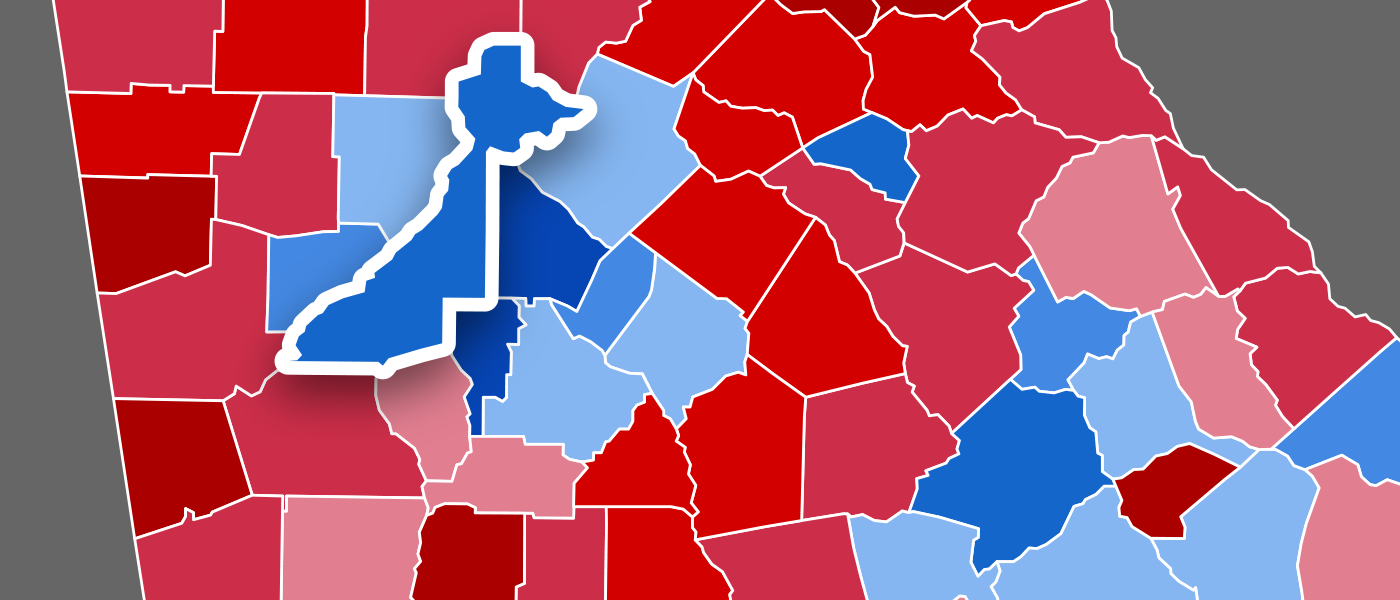
The official 2020 presidential election results in Georgia certified by the Elections Division of the Georgia Secretary of State’s Office had Biden winning by a margin of 11,779 votes—about 0.24% of the total, the narrowest margin of any state. Suspicions about the election center on Fulton County, the most populous county in the state and where most of the City of Atlanta is located.
In 2024 the Georgia State Election Board (SEB) reprimanded Fulton County for major missteps in 2020 that included double-counting 3,075 ballots and deleting more than 17,000 archived ballot images. The missing ballot images make it impossible to perform a comprehensive third-party election audit.
And now, more than five years after the election, we learned from the SEB that Fulton County officials made other errors. Poll managers did not sign a “zero tape” verification at 32 of its 37 early voting sites (86%), which was a violation of the Rules and Regulations of the State of Georgia (GA R&R), 183-1-12.10, 4-5. They did not sign the final tabulation report at 36 of those sites (97%), which was a violation of the GA R&R 183-1-12.12, a. 1. At an SEB hearing on December 9, 2025, a Fulton County attorney said she did “not dispute that the tapes were not signed.”
Voters cast 314,985 ballots at Fulton County’s early voting sites—about 60% of the total. We can estimate how many were affected by these violations by dividing the early voting total equally between the 37 early voting sites. By this methodology, about 272,420 ballots were counted without the required signed zero tapes and about 306,472 without the required signed tabulation.
It is suspicious that nearly all the county’s poll managers at early voting sites didn’t (or wouldn’t) sign their names to the tabulation to assert that the results were “true and correct.” Defenders of Georgia’s certified result say those tabulations were double- and triple-checked by a hand-count audit and a machine recount, but if the initial count wasn’t “true and correct” then, depending on why it wasn’t, recounts from the same piles of ballots wouldn’t necessarily be “true and correct” either.
Defenders have also characterized these missing signatures as innocuous “administrative errors.” It is true that they violated the state’s administrative code, not the law, but this is “splitting hairs.” In any case, why should we trust that the people who broke these rules did not break others? Widespread violations of any election rule undermines trust in the process and “poisons” the entire result. They violate the civil rights of Georgia’s citizens, who are entitled to free, fair elections with clearly defined rules.
The number of known violations in Fulton County affects about 309,547 ballots, and rendered at least 17,000 more un-auditable. This is twenty-eight times as many ballots as Biden’s alleged margin of victory. Fraud would have to affect only about 1.81% of them to have changed the outcome of the race.
Biden probably won Georgia’s sixteen electors, but, in light of this new information, Off on a Tangent is now unable to verify the result or determine the outcome beyond a reasonable doubt. The state is now marked, along with Pennsylvania, with a special note in the results archive.
If Trump had won Georgia’s sixteen electors it would not have changed the national result; Biden would have won a 290-248 electoral majority. If Trump had also won Pennsylvania’s twenty electors it still would not have changed the national result; Biden would have won a 270-268 majority—the narrowest possible win.
At the time of this writing, Off on a Tangent has no reasonable doubt about the 2020 results in any other state, so the national result is not in question. However, that would change if new evidence raises serious concerns in just one more state.